
Google Ads Scores Mislead Teams
📊 Quality score is not one number, and treating it like one is why your diagnostic stays wrong. OpenAI and Google are racing to build AI native advertising ecosystems, and more!

Howdy readers 🥰
In this newsletter, you’ll find:
📊 Grades don’t really matter
📢 Google Launches AI-Powered Ad Formats While OpenAI Builds Out ChatGPT Ads Manager
🏆 Ad of the Day
If you’re new to ScaleUP, then a hearty welcome! You and 50k+ CEOs, CMOS, and marketers have reached the right place. Let’s get into it, shall we? Oh! Before you forget, if someone forwarded this newsletter to you, don't forget to subscribe to our newsletter so you never miss out!
Together with Pounce
Your ads are being mislabeled. And you'd never know.
When AI mislabels your creative, it reads a humor angle as emotional, a gameplay hook as a tutorial. Your analytics treats those as real signals. Everything built on top is off.
Wrong patterns. Wrong briefs. The budget behind ads that were never working.
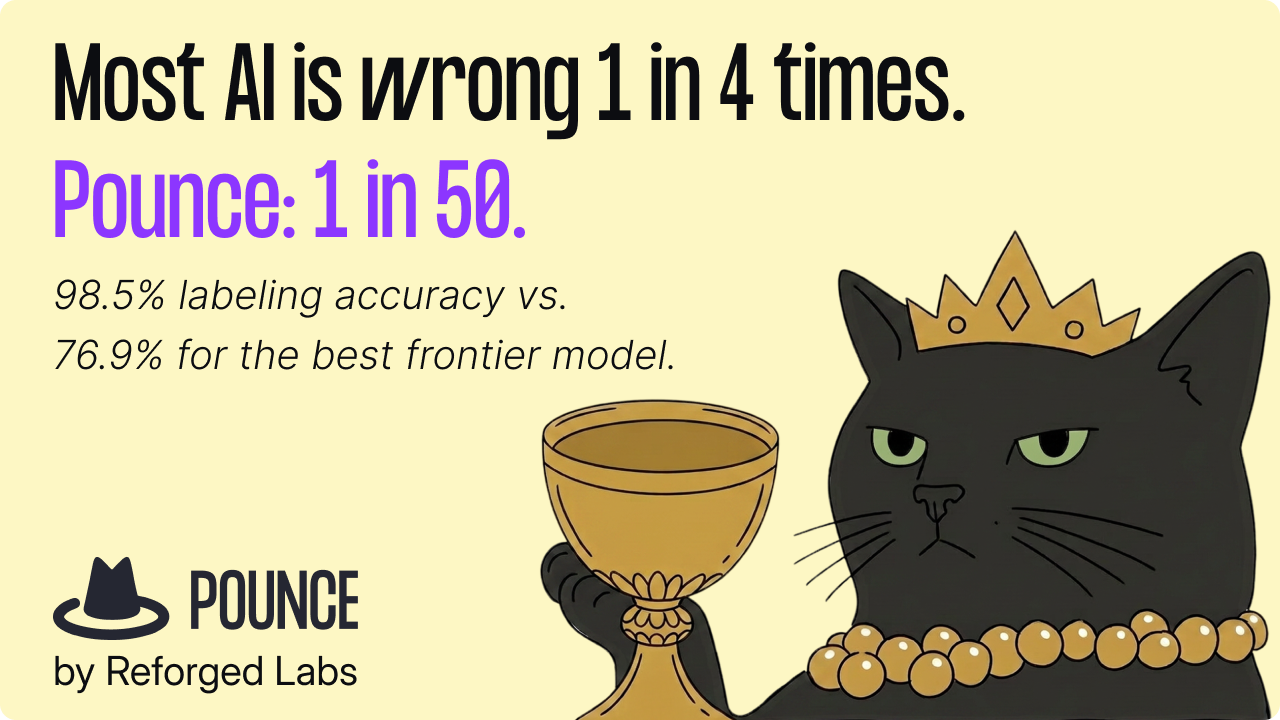
Pounce uses real human judgment baked into every label. 98.5% accuracy on the April 2026 Mobile Gaming Video Ads Understanding Benchmark, versus 76.9% for the best frontier model.
From there, Pounce runs your creative strategy, brief generation, competitor intelligence, and performance optimization autonomously. The work a full performance team does, without the headcount.
This intelligence was built for Supercell, Wildlife Studios, and DeNA. Studios. 4 in 5 ads beat control, and it takes 80% less time on creative research.
Pounce is the first time that the same system is available to any brand that runs ads.
Get started for free with Pounce today.
📊 Grades don’t really matter
Quality Score gets reported as a single 1-10 number in Google Ads. It's composed of three sub-components (Expected CTR, Ad Relevance, Landing Page Experience), each pointing to a completely different fix.
Most teams look at the headline score and rewrite ad copy when the actual problem is the landing page. The score is a router, not an answer, and treating it as a single number sends the wrong fix to the wrong problem.
Pull All Three Quality Score Components, Not The Rolled-Up Number
The rolled-up Quality Score is the symptom display. The component view is the diagnostic.
In Google Ads, the three components are visible at the keyword level: Expected CTR, Ad Relevance, and Landing Page Experience. Each is rated "Above Average," "Average," or "Below Average."
A keyword with a Quality Score of 4 could have Below Average on one component and Average on the other two, or Below Average on all three. These are different problems requiring different fixes.
Route Each Below-Average Component To Its Specific Fix
Once the components are visible, the fix vocabulary becomes specific.
Expected CTR Below Average points to ad copy and offer. The fix is rewriting the headline, the offer, or both. Ad Relevance Below Average points to the keyword-to-ad match. The fix is tightening ad copy to mirror keyword intent, or restructuring the ad group around tighter themes.
Landing Page Experience Below Average points to the page itself: page speed, mobile experience, content relevance, form experience. The fix lives outside the ad account entirely.
These are not interchangeable. Rewriting ad copy when the problem is landing page won't move the score. Rebuilding the landing page when the problem is ad relevance won't either.
Treat Quality Score As A Diagnostic Prompt, Not A Goal To Optimize Directly
Most teams set "improve Quality Score" as the goal and then chase the headline number. The number is downstream. Chasing it directly is the same mistake as chasing ROAS without diagnosing what's broken.
The right frame uses Quality Score as a prompt to investigate. A keyword with a low score tells you to pull the components, identify the broken one, apply the specific fix, and move on. The score will follow.
Quality Score is a router. The components are the answer.
📢 Google Launches AI-Powered Ad Formats While OpenAI Builds Out ChatGPT Ads Manager
Google introduced conversational ad formats for AI Mode at GML 2026. OpenAI rolled out budgeting, targeting, and reporting upgrades to its Ads Manager Beta while quietly testing dynamic CTAs inside ChatGPT.
The Breakdown:
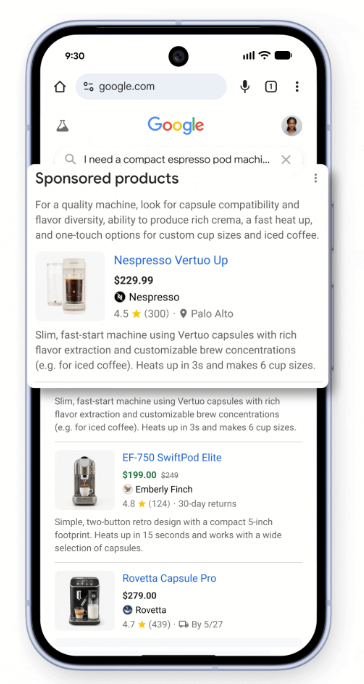
Google Ads Now Live Inside AI Conversations - Conversational Discovery ads answer questions directly in AI Mode with Gemini-generated creative plus an independent AI explainer that evaluates product info alongside the ad, making ads feel contextual, not interruptive.
More Formats for Shopping and Leads - Highlighted Answers place ads inside AI recommendation lists. AI Shopping ads generate custom product explainers. Business Agent for Leads replaces static forms with Gemini-powered chat trained on your website.
OpenAI Adds Budget and Geo Controls - Ads Manager Beta now supports daily budgets alongside lifetime, plus geo targeting at state, DMA, and zip code level across the US, bringing ChatGPT's ad tools closer to Google and Meta standards.
Dynamic CTAs Testing Inside ChatGPT - A small subset of ads now show auto-selected CTAs like Shop Now, Book Now, and Sign Up based on creative and destination, signalling OpenAI is starting to optimise for engagement and conversion.
Both platforms are moving toward conversational intent-driven ad formats embedded inside AI experiences. Google is further ahead but OpenAI is building fast. Early movers on either will have an advantage before costs rise.
Together with The Shift
Most AI content is fascinating. None of it is useful.
You’ve read the AI breakdowns. Watched the million AI explainers. Nodded along to the hot takes.
And then opened a blank doc and had no idea what to actually do.
The Shift is a newsletter built to help you in moments like this. Every tool covered works in the real world, and every prompt in the 1000+ library solves something you’ll actually hit.
3,000+ vetted tools. 1000+ tested prompts. Daily newsletter.
And right now, 3 subscribers win a free 1-year Claude Pro subscription. One click to enter.
🎥 Ad of the Day
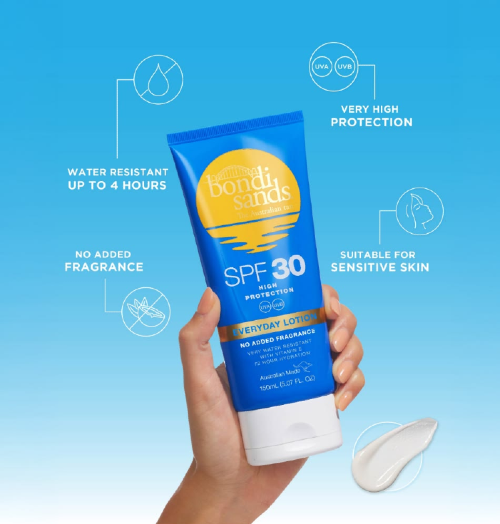
What Works:
Objection Mapping - Every callout targets a known sunscreen frustration: irritation, weak protection, sweat failure, or fragrance sensitivity. The ad removes anxiety before consumers even consider alternatives.
Cognitive Compression - Consumers can evaluate the entire product within seconds because benefits are spatially separated. This reduces scanning fatigue common in skincare ads overloaded with tiny text.
Category Familiarity - The bright blue and yellow palette instantly signals “sun protection” before the brain consciously reads SPF. Familiar category coding speeds recognition during fast scrolling.
List your category’s top anxieties visually around the product like a reassurance map. Consumers often convert faster when they feel protected from bad outcomes, not promised extraordinary ones.
Advertise with Us
Wanna put out your message in front of over 50,000 best marketers and decision makers?
We are concerned about everything DTC and its winning strategies. If you liked what you read, why not join the 50k+ marketers from 13k+ DTC brands who have already subscribed? Just follow this.
At ScaleUP, we care about our readers and want to provide the best possible experience. That's why we always look for ways to improve our content and connect with our audience. If you'd like to stay in touch, be sure to follow us EVERYWHERE🥰
Thanks for your support :) We'll be back again with more such content 🥳