
Simplifying is killing your Google Ads
🫣 Google Ads doesn’t learn from volume. It learns from consistency, Media buyer index of the week, and more!


Howdy readers 🥰

In this newsletter, you’ll find:
🫣Simplifying is killing your Google Ads
📈 Efficiency improved, but teams stayed cautious
🏆 Ad of the Day
If you’re new to ScaleUP, then a hearty welcome! You and 50k+ CEOs, CMOS, and marketers have reached the right place. Let’s get into it, shall we? Oh! Before you forget, if someone forwarded this newsletter to you, don't forget to subscribe to our newsletter so you never miss out!
Together with Athyna
The AI Talent Bottleneck Ends Here
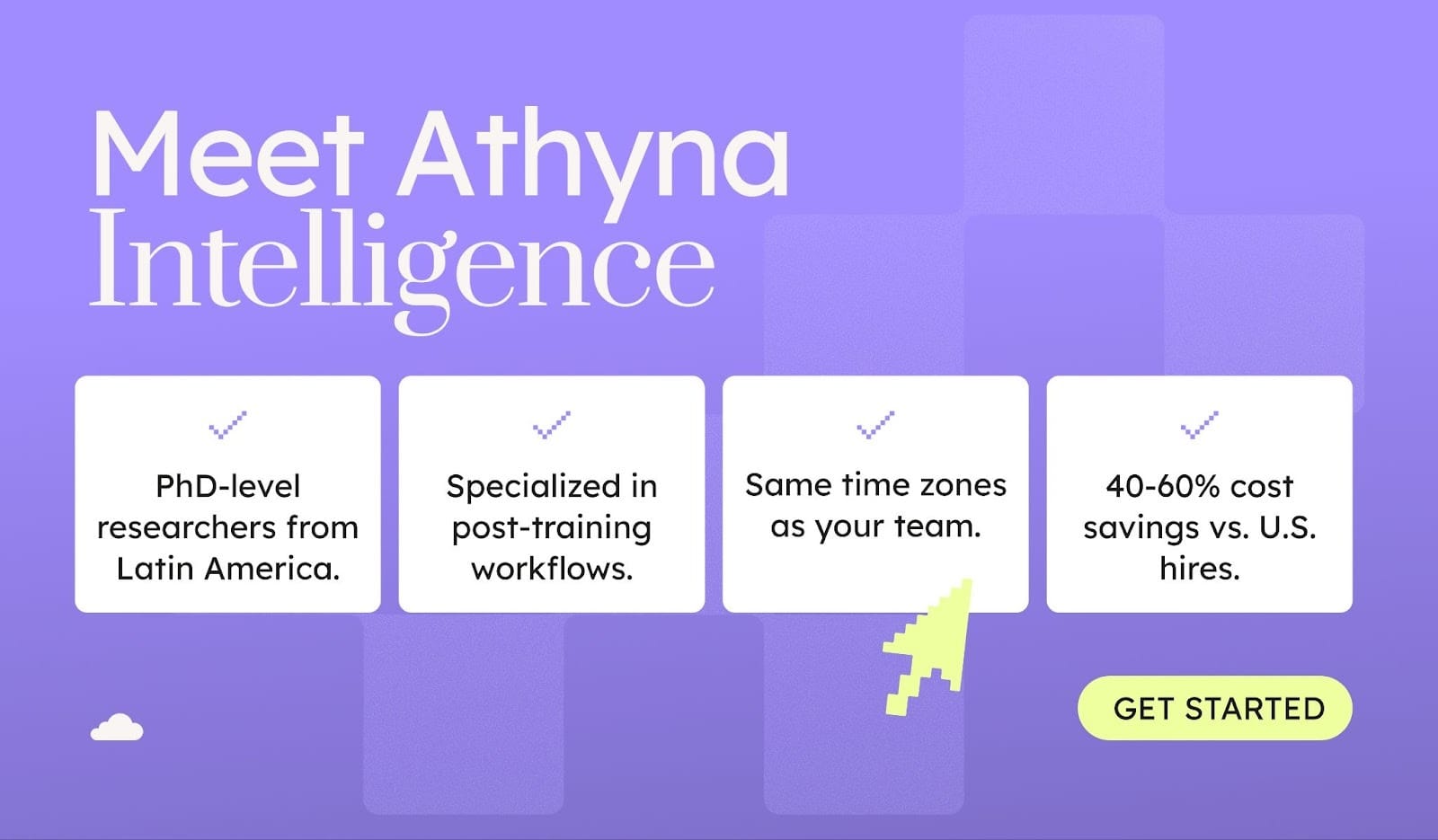
AI teams need PhD-level experts for post-training, evaluation, and reasoning data. But the U.S. pipeline can't keep up.
Meet Athyna Intelligence: a vetted Latin American PhD & Masters network for post-training, evaluation, and red-teaming.
Access vetted PhD experts, deep STEM knowledge, 40–60% savings, and U.S.-aligned collaboration.
🫣Simplifying is killing your Google Ads
Google Ads doesn’t learn from volume. It learns from consistency.
Focusing on Volume is the mistake hidden inside a lot of “simplified” 2026 account structures. Centralization, broad targeting, fewer campaigns. All good ideas are in isolation. But they break the moment the data inside a campaign stops describing one clear economic reality.
Automation only compounds when the signals agree with each other.
Learning breaks when different buyers share the same model
When brand and non-brand traffic sit together, Google is forced to reconcile two incompatible behaviors.
Brand traffic converts faster, cheaper, and with far less persuasion. Non-brand traffic does not. When they’re blended, the system learns an averaged buyer that doesn’t really exist. Bids become conservative where they should be aggressive, and aggressive where intent is weak.
The same problem appears when high-ticket and low-ticket products share a ROAS target. A $20 add-on and a $600 hero product clear auctions differently. When they’re trained together, Google gravitates toward whichever path offers easier feedback, not higher value.
That’s not inefficiency. That’s rational optimization under conflicting signals.
Stale data teaches the wrong customer, even if volume looks healthy
Audience lists work the same way.
A large list that reflects who converted 12–18 months ago carries more weight than it should. It tells Google to go find people who look like your past business, not your current one. As pricing, positioning, and demand shift, that mismatch quietly grows.
Smaller, frequently refreshed lists outperform bloated ones because they describe a buyer that still exists in today’s auctions.
Recency isn’t a hygiene metric. It’s a learning constraint.
This is also where seeing how demand and buyer behavior are shifting outside your account matters, and Semrush One helps surface those shifts so your learning environment reflects who is actually buying now, not who used to. You can start your 7-day free trial here!
Centralization only works when economics align
Data density helps automation only when all inputs reinforce the same outcome.
Centralizing campaigns works when:
- Price points behave similarly
- Margins support the same bid tolerance
- Conversion paths have comparable friction
- Buyer intent follows a similar timeline
When those conditions aren’t true, centralization doesn’t simplify learning. It blurs it. The model still learns, but it learns a compromise that no part of the business actually wants.
The real principle
Google Ads doesn’t need fewer campaigns. It needs fewer contradictions.
Whenever learning environments mix different intent, different economics, or outdated buyer definitions, automation slows down and misallocates confidence.
The accounts that scale cleanly in 2026 aren’t the most consolidated. They’re the most internally coherent.
Once every signal inside a campaign points to the same buyer, the same value, and the same risk tolerance, automation stops guessing and starts compounding.
📈 Efficiency improved, but teams stayed cautious
Paid media felt calmer this week after a choppy stretch. Costs softened in key areas, and conversion quality improved across more channels. Most teams chose control over aggression, prioritizing clean performance before pushing scale.
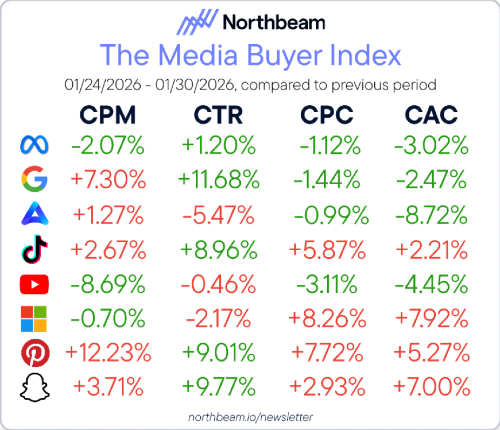
The Breakdown:
1. CPC - Costs rose on TikTok, Microsoft, Pinterest, and Snapchat. Costs fell on Meta, Google, Amazon, and YouTube. Cheaper buying in core channels creates room to test new creative, while rising-cost platforms need tighter guardrails.
2. CAC - CAC rose on TikTok, Microsoft, Pinterest, and Snapchat. CAC fell on Meta, Google, Amazon, and YouTube. Better conversion efficiency is showing up where traffic quality is improving, while weaker channels still need post-click fixes.
3. ROAS: Amazon led with +10.57%, followed by TikTok at +9.43% and Google at +9.04%. Meta and Snapchat posted smaller gains, while Microsoft and Pinterest declined, with Pinterest down -8.53%. Scale should follow sustained return, not short-term efficiency spikes.
Spend stayed concentrated, with the largest channel holding 65.25% budget share. Budgets were trimmed from several mid-tier platforms despite improving performance, signaling restraint rather than risk-taking. Keep shifts measured, and reward channels that hold ROAS week after week.
🏆 Ad of the Day

What Works:
Personalization Removes Generic-ness - Perfume is a risky gift because it can feel impersonal. Engraving makes it feel chosen, like you put thought into it even if you didn’t.
The Heart Visual Does the Heavy Lifting - The background heart plus “I love you” engraving is basically a full story in one second. No copy needed, you get the occasion immediately.
This creates a Reason to Buy Now - Engraving implies lead time and planning, which quietly adds urgency. It feels like something you do before a moment, not after.
If your product is easy to ignore, add a personalization layer. Turning an item into a message makes it harder to replace and easier to buy.
Advertise with Us
Wanna put out your message in front of over 50,000 best marketers and decision makers?
We are concerned about everything DTC and its winning strategies. If you liked what you read, why not join the 50k+ marketers from 13k+ DTC brands who have already subscribed? Just follow this.
At ScaleUP, we care about our readers and want to provide the best possible experience. That's why we always look for ways to improve our content and connect with our audience. If you'd like to stay in touch, be sure to follow us EVERYWHERE🥰
Thanks for your support :) We'll be back again with more such content 🥳