
Stop burying your great pages


Howdy readers 🥰
In this newsletter, you’ll find:
🥲Stop burying your great pages
📊 YouTube, Google Ads, and AI Overviews All Had Updates Worth Knowing This Week
🏆 Ad of the Day
If you’re new to ScaleUP, then a hearty welcome! You and 50k+ CEOs, CMOS, and marketers have reached the right place. Let’s get into it, shall we? Oh! Before you forget, if someone forwarded this newsletter to you, don't forget to subscribe to our newsletter so you never miss out!
Together with Tatari
Your CAC problem isn't in Meta. The fix isn't either.
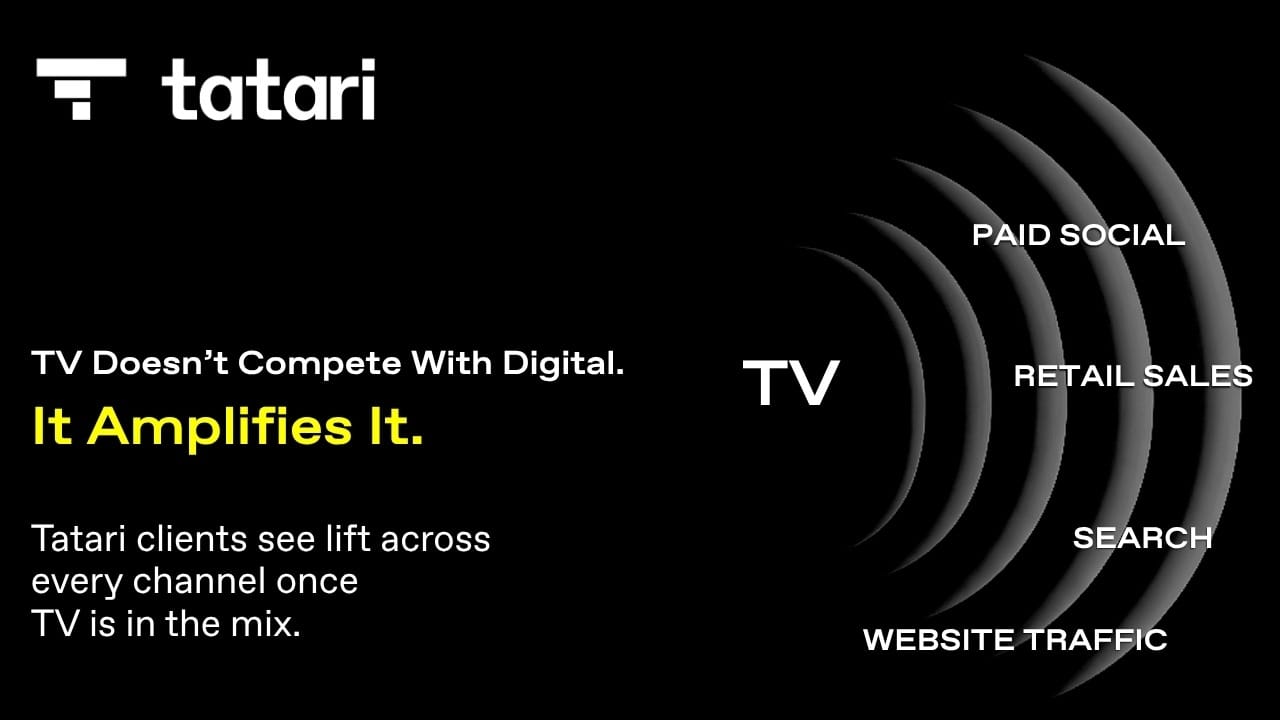
Most performance marketers keep optimizing inside the problem. Better creative, tighter audiences, more testing while CAC climbs and reach stalls quietly.
The brands still compounding aren't finding a Meta fix. They're getting off the ceiling entirely.
Jones Road Beauty added TV through Tatari. Within the first month:
- Meta efficiency improved as net-new audiences hit the algorithm with fresh signals
- Branded search climbed as TV drove discovery at the top of the funnel
- In-store customers started citing TV as how they first found the brand
TV now runs at 20-25% of Jones Road's spend during peak. Not a test budget. A core growth channel.
Fabletics saw the same shift. Once TV was in the mix, the point of diminishing returns on Facebook got pushed out. Same spend, more room to scale.
This is the halo effect. Tatari measures it in real time alongside your digital channels, so you can see what TV is unlocking across your whole stack.
Over 400 brands, including Chime, Calm, and Ro, have made TV their growth multiplier.
Every week you wait is a week someone in your category is pulling customers you could have reached first.
Want to see what it does for your channels? Schedule a demo here.
🥲Stop burying your great pages
AI is reading your content. It’s ignoring most of it.
Not because your content is bad. Because of where you put the good stuff.
44.2% of all ChatGPT citations come from the first 30% of a page. That’s not a rounding error. That’s AI telling you it made up its mind about your page before it got to the part you actually spent time writing.
The insight you buried in paragraph six? Never getting cited. The case study you built up to? Invisible. The stat you saved for the conclusion? Gone.
Here’s how to stop writing for humans who scroll and start writing for systems that extract.
Find the buried answers first
Pull your ten most important pages. For each one, find where the actual answer to the page’s core question first appears.
If it’s not in the first two sentences of the introduction and the first sentence of every H2, you’re already losing citations to a competitor whose content is structured worse but positioned better.
This isn’t about quality. It’s about the extraction order. AI doesn’t reward depth. It rewards what comes first.
Rebuild every section around one rule
Answer first. Context second. Everything else, cut or move.
Passages between 40 and 75 words get cited 3.1x more than longer ones and 2.4x more than shorter ones.  That’s your target.
One sentence that directly answers the heading’s implied question. Two to three sentences of supporting context. Hard stop.
No warm-up. No “in this section we’ll explore.” No building toward the point. The point is the first sentence, or it doesn’t count.
Go through every H2 on your highest-traffic pages and apply this test: can this section answer its question without anything before it? If the answer is no, rewrite the opening until it can.
Do the same thing to your page introductions
Most introductions are throat-clearing. Context, background, a hook, and then eventually the thing the reader came for.
AI extracts from the top 30% of your page. If your introduction is three paragraphs of setup before a single useful claim, that’s what gets pulled into AI answers. Rewrite every introduction to lead with your core argument in the first two sentences. The narrative can come after.
Make your data impossible to miss
Statistics increase AI visibility by 22%. Quotations increase it by 37%. Neither works if they’re buried.
Every data point and attributed claim belongs in the opening sentence of its passage, not three sentences in, where the extraction probability drops off.
Once restructured, track what’s actually getting picked up. SEMrush’s AI Visibility Toolkit shows exactly which pages are being retrieved across ChatGPT and Google AI Mode, so you can see whether the restructure is working instead of guessing. You can try it for free for 7 days.
The only thing left to do
Pick five pages. Find where each answer lives. Move it to the top of every section. That’s the whole fix. It takes an afternoon. The compounding effect runs for months.
📊 YouTube, Google Ads, and AI Overviews All Had Updates Worth Knowing This Week
YouTube is putting ads in new places, Demand Gen campaigns are stuck in review limbo, and new data shows AI Overview CTR decline may have bottomed out, here is what changed and what it means.
The Breakdown:
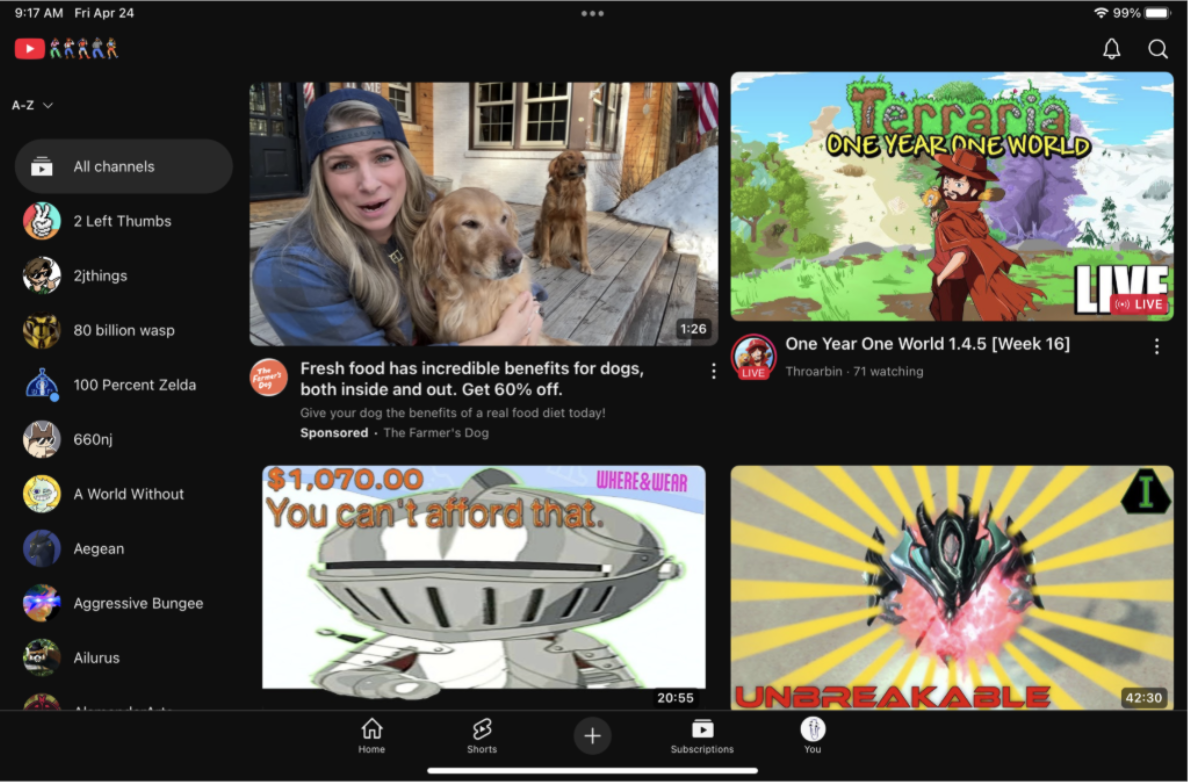
YouTube is Expanding Ad Placements - YouTube is rolling out side-by-side ads on live content, playing ads underneath livestreams while muting stream audio during breaks. Ads are also now appearing in the subscriptions feed, a placement that was previously largely ad-free.
Demand Gen Ads Are Stuck in Review - Advertisers are reporting week-long review delays for Demand Gen campaigns with no policy violations to explain the holdup. Search and Performance Max are unaffected. Google confirmed the issue with no fix timeline given.
AI Overview CTR Decline May Have Bottomed Out - Seer Interactive analyzed 5.47 million queries across 53 brands. Organic CTR on AIO searches hit a low of 1.3% in December 2025, then climbed to 2.4% by February 2026, an 85% jump in two months.
Getting Cited in AIOs Now Drives Real Traffic - Pages cited in AIOs see around 2.1% CTR. Pages not cited but with an AIO present drop to 0.9%. Comparison queries trigger AIOs 95% of the time, and question queries around 86%.
The clicks from AIO searches are not gone; they are concentrating on cited sources. For Demand Gen advertisers the review delay is a known Google issue, so nothing to fix on your end for now. YouTube subscriptions feed ads have no official explanation yet.
🎥 Ad of the Day
What Works:
The Hidden Conversion Mechanism
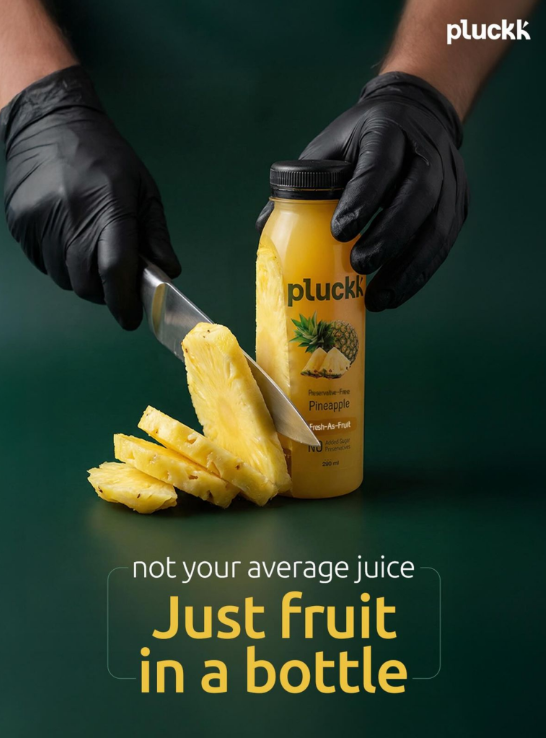
This ad uses hyper-literal product truth visualization to eliminate skepticism instantly. Cutting the pineapple right into the bottle collapses the gap between raw ingredient and final product, making processing feel nonexistent. You’re not buying juice, you’re buying fruit in its purest transferred form.
The black gloves subtly introduce a controlled, almost surgical precision, signaling cleanliness and intentionality without saying it.
“Not your average juice” reframes the category while the visual proves it.
Don’t just claim purity, visually remove every step between source and product. When the process disappears, trust spikes.
Advertise with Us
Wanna put out your message in front of over 50,000 best marketers and decision makers?
We are concerned about everything DTC and its winning strategies. If you liked what you read, why not join the 50k+ marketers from 13k+ DTC brands who have already subscribed? Just follow this.
At ScaleUP, we care about our readers and want to provide the best possible experience. That's why we always look for ways to improve our content and connect with our audience. If you'd like to stay in touch, be sure to follow us EVERYWHERE🥰
Thanks for your support :) We'll be back again with more such content 🥳