
Stop Letting Customers Do the Math
🤑Cost-per-X thinking is killing your pricing power. Here’s how to break the denominator, Google updates ads bidding, ad triggers, and AI checkout, and more!


Howdy readers 🥰
In this newsletter, you’ll find:
🤑Stop Letting Customers Do the Math
📊 Google Updates Ads Bidding, Ad Triggers, and AI Checkout
🏆 Ad of the Day
If you’re new to ScaleUP, then a hearty welcome! You and 50k+ CEOs, CMOS, and marketers have reached the right place. Let’s get into it, shall we? Oh! Before you forget, if someone forwarded this newsletter to you, don't forget to subscribe to our newsletter so you never miss out!
Together with Motion
Most Teams Are Missing This Paid Social Skill

Paid social is not broken. Teams are missing the skill that actually converts spend into results. Without a real creative system, more testing just creates noise and slows learning.
Motion’s Creative Strategy Bootcamp is a free, 8-week live program built for you to learn how to run a full creative sprint, from idea to insight, without guesswork.
This is hands-on training led by active Creative Strategists working on brands like Calm, Harry’s, and Happy Mammoth.
- You learn how to turn product features and customer insight into hooks that consistently convert.
- You work on real ads every week through live classes, office hours, and direct coaching.
- You graduate with a portfolio of ad wins and a Motion certificate you can display on LinkedIn.
The program runs live every Tuesday at 1 PM EST, with recordings shared within 24 hours.Seats are intentionally limited to keep feedback high quality. It starts on starts March 17th.
🤑Stop Letting Customers Do the Math
You don’t lose margin at checkout.
You lose it the moment a buyer thinks, “That’s $1.60 per ml.”
Or “$4 per wear.”
That quiet mental division flips the frame from desire to efficiency. Once the frame shifts, your product stops competing on identity and starts competing on math.
Math invites comparison. Comparison invites discounting. Discounting compresses margin. The fix isn’t higher pricing.
It’s structural.
1. Break the Denominator
When your offer can be divided cleanly, every channel becomes a performance test.
Paid ads must justify CPA instantly. Influencer campaigns get judged purely on short-term sales lift. Any volatility feels dangerous because the offer itself has no structural buffer.
The antidote is an incompatible value.
Stack across units that don’t share a denominator:
- The physical product
- A structured system or protocol
- Progression milestones
- Identity reinforcement
You can divide ml. You cannot divide the transformation speed.
Once the offer becomes a system, evaluation shifts from “Is this cheaper?” to “Do I want this structure?”
That protects pricing power.
2. Systems Increase Leverage and Exposure
Here’s the nuance most brands miss.
When you sell a system instead of a SKU, influencer marketing becomes more powerful, but also more sensitive.
Why?
Because creators are no longer selling a product. They’re introducing an ecosystem. If the wrong audience sees it, the value stack doesn’t land, and performance volatility increases.
This is where control layers matter.
Using a platform like Modash to assess audience fit, authenticity signals, and growth patterns reduces partnership fragility inside a system-based offer.
When you’re scaling non-calculatable bundles, creator selection precision becomes part of margin defense. You can try it for free for 14 days
3. Expand Utility, Not Quantity
Weak bundles increase volume. Strong bundles increase leverage.
Ritual kits. Implementation stacks. Tiered ecosystems. Each layer should accelerate outcome velocity, not inflate units. When perceived utility expands faster than price, AOV rises without discount pressure.
The tradeoff is clarity. Systems require sequencing and onboarding, not just packaging.
4. Structure Creates Switching Cost
A non-calculatable offer increases soft switching friction because buyers enter a framework, not a transaction.
That reduces promo dependency, improves repeat probability, and makes blended CAC more forgiving under paid scale.
When your product competes on math, it competes on efficiency. When it competes on structure, it competes on meaning. And meaning is much harder to divide.
📊 Google Updates Ads Bidding, Ad Triggers, and AI Checkout
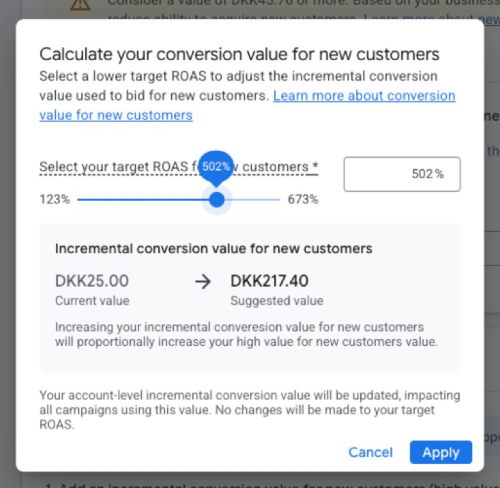
Google is introducing changes across Ads and AdSense, while expanding in-search commerce through AI Mode. These updates affect how advertisers value new customers, how publishers trigger full-screen ads, and how shoppers complete purchases directly from search.
The Breakdown:
1. ROAS-Based Value for New Customers - Advertisers can now enter a target ROAS and receive a suggested conversion value for new customers, reducing reliance on manual flat estimates that often misalign with profitability goals. It supports campaigns focused on first-time buyer growth.
2. Limits of the Current Bidding Setup - The suggested value applies at a broader campaign level. It does not adjust dynamically by auction, product, or context. More granular control would further improve acquisition efficiency.
3. New Vignette Ad Triggers - AdSense now adds three new triggers based on scroll completion, inactivity, and back-button use. These expand when full-screen ads can appear, unlocking more high-value impression opportunities.
4. One-Month Review and Auto Activation - The new setting appears enabled from February 9, 2026, but activates after one month. If no action is taken, it turns on automatically. Opting out disables both new and existing triggers.
Meanwhile, Google is rolling out UCP-powered checkout in AI Mode, enabling US shoppers to complete purchases directly within Search and the Gemini app. Etsy and Wayfair listings are already supported, with Shopify, Target, and Walmart integrations scheduled to launch soon.
🎥 Ad of the Day
What Works:
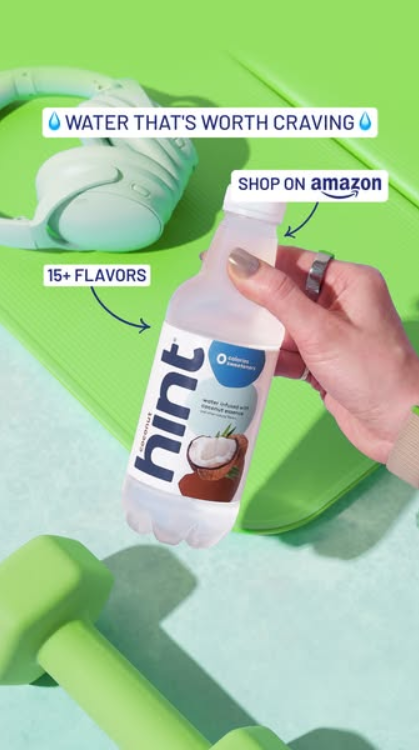
1. They Turn Water Into a Want, Not a Should: “Water that’s worth craving” flips hydration from obligation to desire. That’s powerful because most people don’t forget to drink, they forget because it’s boring.
2. This is a Habit Swap Play: It’s quietly targeting soda and juice drinkers. Make water enjoyable enough, and you don’t need to preach about health.
3. The Amazon Callout Is Tactical: “Shop on Amazon” lowers friction fast. No need to wonder where to find it, your brain already trusts the checkout process.
If your product fixes a boring habit, sell excitement. People don’t change routines because they should; they change because it feels better.
🪩Events
🔥 How MCoBeauty Scales Original Creator Content
February 26 | 11AM ET | Free Virtual Event
What does real co-creation look like inside a high-growth beauty brand? In this free 60-minute session hosted by Modash, Gabriel Gomez, Head of Social and Creators at MCoBeauty, breaks down how they choose creators, structure collaborations, and turn ideas into scalable content systems.
👉 Register Now
Can’t make it live? Register anyway, and we’ll send you the replay.
Advertise with Us
Wanna put out your message in front of over 50,000 best marketers and decision makers?
We are concerned about everything DTC and its winning strategies. If you liked what you read, why not join the 50k+ marketers from 13k+ DTC brands who have already subscribed? Just follow this.
At ScaleUP, we care about our readers and want to provide the best possible experience. That's why we always look for ways to improve our content and connect with our audience. If you'd like to stay in touch, be sure to follow us EVERYWHERE🥰
Thanks for your support :) We'll be back again with more such content 🥳