
The End of Auction-Led Growth
🚀 Winning now depends on attention quality, Media buyer index of the week, and more!


Howdy readers 🥰
In this newsletter, you’ll find:
⌛️ The End of Auction-Led Growth
📊 What This Week’s Paid Media Numbers Are Really Saying
🏆 Ad of the Day
If you’re new to ScaleUP, then a hearty welcome! You and 50k+ CEOs, CMOS, and marketers have reached the right place. Let’s get into it, shall we? Oh! Before you forget, if someone forwarded this newsletter to you, don't forget to subscribe to our newsletter so you never miss out!
Together with Insense
Stop Guessing. Start Working With Creators Who Actually Convert
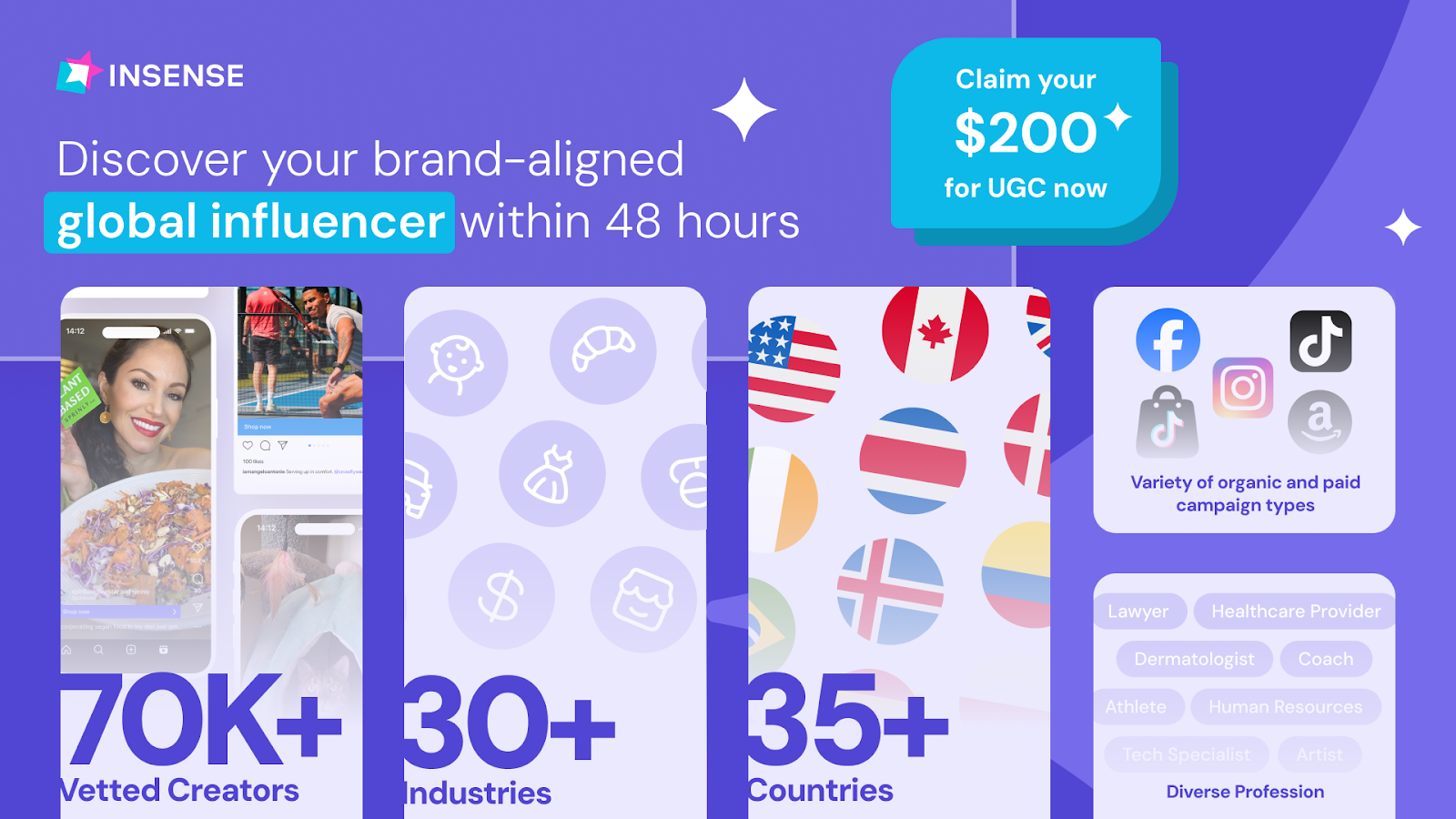
You don’t need more creators. You need the right creators, the ones who look like your buyer, speak their language, and move your metrics from the first piece of content.
But manually sourcing them? Total momentum killer and the fastest way to fall behind in Q5.
That’s why 2,000+ brands and agencies now rely on Insense. In under 48 hours, you get high-fit creators hand-matched to your exact niche so you can run everything end-to-end: product seeding, UGC, TikTok Shop, Meta Partnership Ads, and TikTok Spark Ads without the sourcing chaos.
Here’s what brands are actually seeing:
- Revolut: 350+ UGC assets from 140+ creators across 10+ countries.
- goPure: 150+ UGC videos generated at zero cost through product seeding.
- Maty’s: 12x higher reach using TikTok Spark Ads at roughly $0.60 CPC.
Now imagine your Q1 pipeline built on creators who actually convert, not creators you hope will convert.
Book a free strategy call by December 31 and get a $200 bonus for your first campaign!
⌛️ The End of Auction-Led Growth
The biggest mistake brands will make heading into 2026 is fighting harder for attention in places where attention has already collapsed. Feeds are not scarce anymore.
Focus is.
Every algorithmic surface is flooding users with more content than the human brain can meaningfully process. The result is not lower reach. It’s lower impact. Ads still get impressions, but they fail to land, stick, or change behavior.
This forces a mindset shift most teams haven’t made yet. The next phase of growth is not about winning auctions. It’s about reallocating attention spend toward environments where signal density still exists.
Strategy 1: Optimize for Attention Compression, Not Reach
Most channels stretch attention thin. Short clips, infinite scroll, constant interruption. Your message competes with dozens of others in minutes.
Underutilized environments compress attention instead. Fewer ads. Longer sessions. A defined beginning and end. The brain switches from scanning to absorbing.
The strategic unlock is not “more impressions.”
It’s fewer moments with more cognitive load per impression.
Strategy 2: Treat Context as Part of the Creative
Creative performance is not just copy and visuals. It is where the message lives.
A message seen in a chaotic feed is interpreted as disposable.
The same message seen in a calmer, story-driven environment is interpreted as deliberate.
Brands that win will design creative with the consumption context in mind, not retrofit social ads everywhere else.
Strategy 3: Shift Measurement From Clicks to Memory Signals
As AI increases content volume, clicks become cheaper and less meaningful.
Elite teams will start asking:
- Did this placement improve unaided recall?
- Did it shorten future decision time?
- Did it raise trust before the sale, not just after?
These signals matter because attention is cumulative. A focused impression today lowers acquisition cost tomorrow.
Strategy 4: Reallocate Spend Before Saturation, Not After
By the time a channel “proves itself” publicly, its advantage is gone.
The winning behavior is early reallocation into environments where:
- The ad inventory is still scarce
- Creative standards are higher
- Competition has not normalized bidding
This requires conviction before dashboards fully validate it.
This is where teams need systems that help them think structurally, not react emotionally. Tools like Lindy AI CMO fit naturally here by studying competitive environments, mapping where attention is overcrowded versus underutilized, and generating strategic briefs that teams can act on instead of chasing the loudest channels. You can singup for free and see AI CMO in action here.
Final Reframe
The next growth edge will not come from better targeting. It will come from choosing quieter rooms. Brands that reallocate attention early will feel slower at first.
Then suddenly, everything compounds. That is how attention arbitrage actually works in 2026.
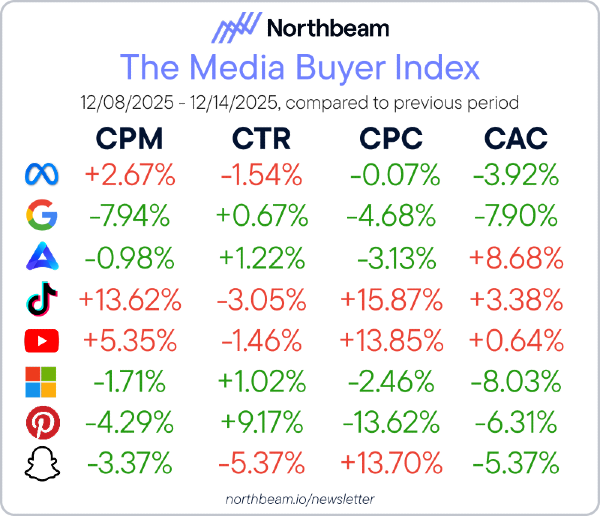
📊What This Week’s Paid Media Numbers Are Really SayingThis week shows a clear split between efficiency channels and rising-cost reach channels. CPC, CAC, and ROAS movements reveal where auction pressure is building, where conversion quality is improving, and how budget allocation is responding in real time.
The Breakdown:
1. CPCs - Google and Pinterest saw a meaningful decrease in CPCs, while TikTok, YouTube, and Snapchat experienced double-digit CPC inflation, signaling rising competition in video-driven inventory and softer auctions in intent-led environments.
2. CACs - Google, Meta, Microsoft, Pinterest, and Snapchat all improved CAC, confirming that lower costs translated into real efficiency. Amazon’s CAC rose despite cheaper clicks, pointing to conversion quality issues, while TikTok’s higher CAC suggests fewer but higher value conversions.
3. ROAS - TikTok led ROAS gains at plus 10.87%, followed by Microsoft at plus 9.83% and Google at plus 4.71%. Meta posted a steady 2.87 percent increase, while YouTube dropped 15.99 percent, signaling value leakage despite higher CVR.
Budget share explains intent. Meta holds 62.08 percent and Google 27.50 percent of spend, both improving CAC and ROAS, validating scale concentration. Microsoft delivers strong ROAS on just 0.94 percent share, signaling expansion potential, while YouTube and Amazon require tighter efficiency gates before reallocating spend.
🏆 Ad of the Day

What Works:
1. Feels Like Access - “You’re Invited” doesn’t sound like an ad, it sounds like someone thought of you. That small shift makes scrolling slow down because it feels personal, not promotional.
2. Good Kind of Mess - The pile of products feels like a real holiday counter, busy but intentional. It signals popularity and trust, like these are the things everyone already reaches for.
3. Pink Means Treat - The pink isn’t shouting “sale,” it’s whispering indulgence. It reframes skincare as a gift or ritual, not a fix, which is exactly how people want to shop during holidays.
This works because it doesn’t sell products, it sells a moment. It feels warm, abundant, and welcoming, like buying is just the natural next step, not a decision.
Advertise with Us
Wanna put out your message in front of over 50,000 best marketers and decision makers?
We are concerned about everything DTC and its winning strategies. If you liked what you read, why not join the 50k+ marketers from 13k+ DTC brands who have already subscribed? Just follow this.
At ScaleUP, we care about our readers and want to provide the best possible experience. That's why we always look for ways to improve our content and connect with our audience. If you'd like to stay in touch, be sure to follow us EVERYWHERE🥰
Thanks for your support :) We'll be back again with more such content 🥳