
The Missing SEO Audit Costing You Sales
🧠 Two audits your seo strategy is missing, and one is costing you AI visibility, Google brings creative production in-house, Microsoft cleans up bidding, and more!


Howdy readers 🥰
In this newsletter, you’ll find:
🧠 Two Audits Your SEO Strategy Is Missing, And One Is Costing You AI Visibility
🔧 Google Brings Creative Production In-House While Microsoft Cleans Up Bidding
🏆 Ad of the Day
If you’re new to ScaleUP, then a hearty welcome! You and 50k+ CEOs, CMOS, and marketers have reached the right place. Let’s get into it, shall we? Oh! Before you forget, if someone forwarded this newsletter to you, don't forget to subscribe to our newsletter so you never miss out!
Together with Omnisend
150,000 brands can't be wrong about email marketing
Your email tool should be making money. Right now, it's probably just making work.
Omnisend changes that. Campaigns that actually pay off, a platform so intuitive it feels like you built it, and a real support team on call around the clock - brands average $79 back for every $1 spent on Omnisend.
Here's what that looks like in practice:
- Dukier grew revenue 525%, with 55% of it coming from automations they set once
- Kate Backdrop hit a 1:300 ROI across omnichannel campaigns
- Vagari Bags pulled a 1:121 ROI from SMS alone
Over 150,000 brands already trust Omnisend - and 69% of their revenue runs on autopilot through automations they set once, with 17.3% higher CTRs to show for it.
You're up and running in 30 minutes. Fully migrated in 5 days.
🧠 Two Audits Your SEO Strategy Is Missing, And One Is Costing You AI Visibility
Here's a conversation that plays out more than it should.
A site has been investing in SEO for months. Traffic is up. Rankings look decent. Someone pulls the revenue report, and the correlation isn't there. The content is working. The conversions aren't following.
Nine times out of ten, the technical foundation has holes that no amount of content will paper over.
The revenue-first diagnostic.
Most audits start with what's visible: keywords, backlinks, and content gaps. The smarter starting point is whether the site is structurally capable of turning search traffic into money.
Run these checks before anything else:
- Can a user reach a purchase decision page in three clicks from the homepage?
- Is the development environment accidentally visible to search engines?
- Are editorial pages competing with and outranking transactional ones?
- What percentage of crawl budget is being absorbed by low-value pages?
- Is revenue from organic channels being measured independently?
- Are product or service page templates generating duplicate heading structures?
- How long have indexing errors been sitting unaddressed?
- Do the pages closest to conversion have any structured markup?
- What share of the indexed content has no meaningful depth?
- Are internal links passing equity cleanly or routing through old redirects?
- Is the sitemap accurately reflecting canonical page versions?
- Is the team publishing new content faster than it's improving what already exists?
- How do key landing pages perform on mobile loading metrics?
- Which commercial queries are currently triggering AI-generated answers?
- Do high-traffic pages have a defined role in the path to purchase?
Any site failing more than three of these has a ceiling on what content investment can achieve. The foundation limits the return.
The second audit almost nobody runs.
Search behavior is shifting. A growing share of commercial queries now return AI-generated answers before a single organic result. The brands appearing in those answers aren't necessarily the biggest or the best-known. They're the ones that gave AI systems something unambiguous to work with.
AI doesn't browse a site the way a human does. It looks for explicit, machine-readable signals that confirm what a business is, what it does, and how it relates to the category.
Without those signals, it either skips the brand entirely or pulls information from wherever it can find something cleaner, which is often a competitor's site or a third-party directory the brand hasn't updated in two years.
The fix is less technical than it sounds. Structured markup that formally declares brand identity and domain authority gives AI crawlers a direct answer instead of forcing them to guess. Sites that have implemented this are showing up in AI-generated responses for category queries where they previously had no presence at all.
SEMrush runs both diagnostics in a single pass, technical revenue blockers and AI visibility gaps together, so the picture is complete rather than partial. You can try it free for 7 days.
The site's compounding search returns right now fixed the foundation before doubling down on content. That sequence matters more than most strategies account for.
🔧 Google Brings Creative Production In-House While Microsoft Cleans Up Bidding
Two platform updates this week that change how campaigns get built. Google is making it easier to create ads without leaving the platform. Microsoft is simplifying how you set bidding targets on new campaigns.
The Breakdown:
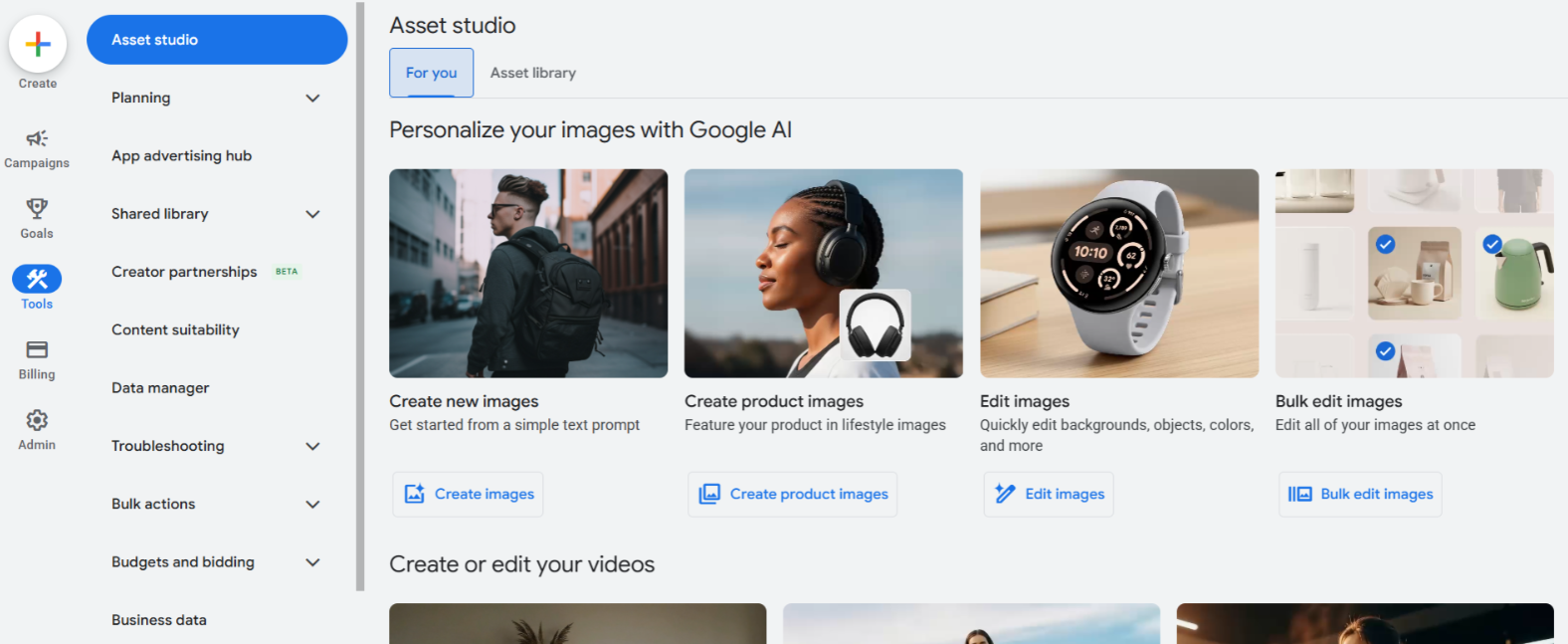
1. Generate Ad Creative Without Leaving Google Ads - Nano Banana Pro is now free inside Asset Studio. You can prompt visuals, edit conversationally, build multi-product scenes, and test photo-realistic imagery without touching an external tool.
2. More Built-In Assets Are Coming - Too Google is adding its own library of photos, videos, icons, and 3D assets directly into Ads. Good news for lean teams, but every AI-generated output still needs a brand and compliance check before it goes live.
3. Microsoft Made Bidding Setup Cleaner - Target CPA and Target ROAS now sit as optional layers inside Maximize Conversions and Conversion Value strategies. Nothing changes for existing campaigns. Fewer choices upfront, but the targets you set carry more weight now.
Both platforms are removing steps between idea and launch. That speed is useful, but it also means fewer natural pauses for review. Test before scaling, set realistic targets, and don't let faster setup replace sharper thinking.
🎥 Ad of the Day
What Works:
The Hidden Conversion Mechanism
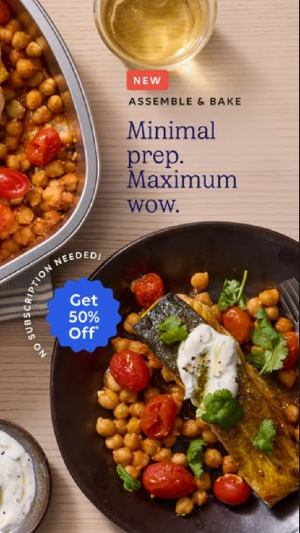
This ad quietly resolves the effort vs reward paradox in home cooking. “Minimal prep. Maximum wow.” isn’t just copy; it’s a promise that you get credit without effort, which is what most people actually want when they cook.
The plated dish looks restaurant-level, creating a status outcome. You’re not buying food, you’re buying the ability to impress with zero skill.
“Get 50% off” is secondary. The real hook is effortless competence.
Sell the identity payoff, not the product. People want to feel skilled without doing the work.
Advertise with Us
Wanna put out your message in front of over 50,000 best marketers and decision makers?
We are concerned about everything DTC and its winning strategies. If you liked what you read, why not join the 50k+ marketers from 13k+ DTC brands who have already subscribed? Just follow this.
At ScaleUP, we care about our readers and want to provide the best possible experience. That's why we always look for ways to improve our content and connect with our audience. If you'd like to stay in touch, be sure to follow us EVERYWHERE🥰
Thanks for your support :) We'll be back again with more such content 🥳