
When Performance Becomes a Trap
🪤Stable CPAs can hide shrinking audience coverage, Google Ads improves daily workflow, and more!


Howdy readers 🥰

In this newsletter, you’ll find:
🪤When Performance Becomes a Trap
🛠️ Google Ads quietly improves daily workflow
🏆 Ad of the Day
If you’re new to ScaleUP, then a hearty welcome! You and 50k+ CEOs, CMOS, and marketers have reached the right place. Let’s get into it, shall we? Oh! Before you forget, if someone forwarded this newsletter to you, don't forget to subscribe to our newsletter so you never miss out!
Together with Belay
Growth hides finance mistakes until it’s too late
Hitting $50k, $100k, even $250k a month feels like momentum. But this is where many operators quietly lose control. Not because revenue slows, but because decisions start getting made on numbers that are already outdated.
When financials are updated retroactively, you are always driving in the rearview mirror. Hiring feels right until cash tightens. Spend looks justified until margins disappear. DIY accounting works early, then cracks as complexity scales.
This is the inflection point where smart founders and operators pause and reassess:
👉 What changes when your financials are updated weekly instead of retroactively?
👉 Why does delayed financial data cause bad decisions even when revenue looks healthy on paper?
👉 What breaks first when founders try to “DIY accounting” while scaling growth and operations?
BELAY’s fractional finance model gives you U.S.-based experts who take ownership of your books and surface weekly clarity before problems compound.
If finance feels heavier as you grow, that is the signal.
Download the Guide to Outsourced Accounting and regain control!
🪤When Performance Becomes a Trap
The most dangerous moment in marketing isn’t when ads fail. It’s when one message starts winning consistently.
Performance stabilizes. CPAs look clean. Scaling feels straightforward. The system finally has something to lean on, so everything leans harder. Budgets follow. Creative variations orbit the same idea. Landing pages reinforce the same story. Email echoes the same promise.
Nothing feels wrong. That’s exactly the problem.
Every message attracts a specific type of buyer, whether it’s intentional or not.
Fear-led messaging pulls urgency-driven customers. Aspirational messaging attracts long-horizon planners. Belonging-focused messaging brings community-oriented buyers. Each group behaves differently after the first purchase.
- They repurchase differently.
- They tolerate price changes differently.
- They respond to new products differently.
When one emotional frame dominates acquisition, it doesn’t just win auctions. It quietly reshapes the customer base.
Over time, the entire business adapts to that buyer type.
Product development starts by favoring what they want. Offers get tuned to their objections. Promotions align with their behavior. Retention strategies optimize around their habits.
Other buyer types don’t actively reject the brand. They just stop recognizing themselves in it. They bounce earlier. They hesitate longer. They convert less often.
The market doesn’t disappear. Coverage shrinks.
This is how brands end up capped without realizing why.
Metrics still look fine. ROAS holds. Retention is “healthy.” But expansion slows. New audiences don’t respond the same way. Scaling starts requiring more frequency, more pressure, and more repetition of the same message.
The issue isn’t creative fatigue.
It’s an emotional monoculture.
This is why brands that use creator-led variation to test distinct emotional angles avoid overfitting one buyer type. Platforms like Insense make it easier to source brand-aligned creators who speak to different motivations without diluting performance. You can book a discovery call by Jan 16 and get a $200 bonus for your first campaign.
The mistake isn’t choosing a strong emotional hook. The mistake is allowing one emotional driver to become the only one the system is built around.
Winning ads create gravity. Gravity pulls everything into alignment. Without intervention, that alignment narrows the business.
The solution isn’t abandoning what works. It’s intentionally preserving range.
That means testing emotions as separate acquisition lanes, not blended messaging. Watching how different buyer types behave after purchase, not just how they convert. Protecting optionality even when one message outperforms.
Growth feels efficient when one message dominates. It feels durable when multiple motivations coexist.
The real risk isn’t that the message stops working.
It’s that it keeps working long enough to define the limits of who the brand is allowed to grow with. That’s when one message working too well becomes the thing holding everything else back.
🛠️ Google Ads quietly improves daily workflow
Google Ads rolled out two updates that won’t grab headlines but will save time. One makes it easier to track account changes. The other helps advertisers find and manage creators without messy spreadsheets.
The Breakdown:
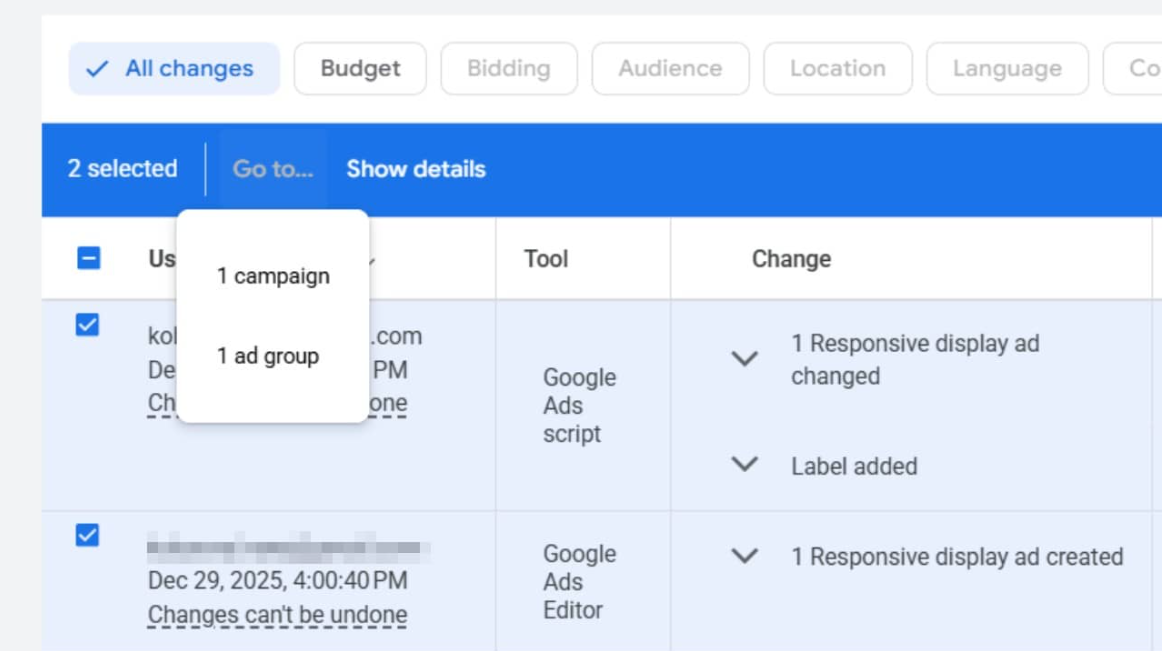
1. Change history gets less painful - The new “Go to…” button lets you jump straight from a change log to the affected campaign or ad group, removing the usual back-and-forth when auditing or troubleshooting.
If you rely on scripts, bulk edits, or Google Ads Editor, this shortcut matters. It makes it faster to understand what changed and where, without digging through account layers.
2. Creator discovery gets practical - Creator Search (beta) allows advertisers to find YouTube creators by keywords or channel handles. Filters like subscriber count, views, and location make shortlisting faster.
The new Management section keeps creator conversations, statuses, and deadlines in one place, bringing creator partnerships closer to how paid media teams already work.
These updates reduce friction in two time-heavy areas: audits and creator workflows. They won’t change strategy, but they do remove daily annoyances. For teams managing scale, small efficiencies like this add up quickly.
🏆 Ad of the Day
What Works:
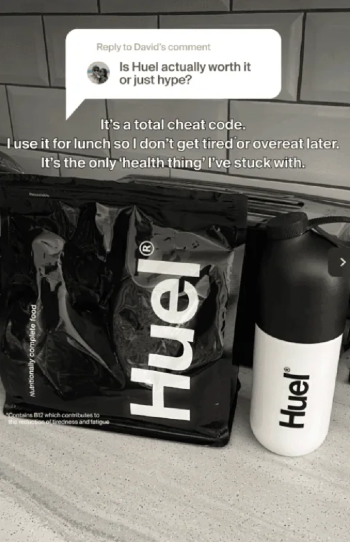
1. Awareness Level: Mid to bottom funnel. People already know Huel exists. They’re stuck on the final question: “Is this actually worth paying for?”
2. Execution & Framing: It looks like a comment reply, not an ad. Low-fi photo, casual language, zero polish. That makes it feel honest and earned, not manufactured.
3. Strategic Role: This is objection-killing. It reassures hesitant buyers by showing a real person using it consistently, not just praising features or nutrition stats.
Your best ad angles are already in your comments. Turn real questions into ads and answer them plainly, it converts better than clever copy ever will.
Advertise with Us
Wanna put out your message in front of over 50,000 best marketers and decision makers?
We are concerned about everything DTC and its winning strategies. If you liked what you read, why not join the 50k+ marketers from 13k+ DTC brands who have already subscribed? Just follow this.
At ScaleUP, we care about our readers and want to provide the best possible experience. That's why we always look for ways to improve our content and connect with our audience. If you'd like to stay in touch, be sure to follow us EVERYWHERE🥰
Thanks for your support :) We'll be back again with more such content 🥳