
Why the Holiday Demand didn’t die
🤔 Why post–shipping cutoff drops are not demand losses, Do faces actually help YouTube thumbnails, and more!


Howdy readers 🥰
In this newsletter, you’ll find:
🤔The Q4 Belief Shift
😄 Do Faces Actually Help YouTube Thumbnails?
🏆 Ad of the Day
If you’re new to ScaleUP, then a hearty welcome! You and 50k+ CEOs, CMOS, and marketers have reached the right place. Let’s get into it, shall we? Oh! Before you forget, if someone forwarded this newsletter to you, don't forget to subscribe to our newsletter so you never miss out!
Together with Insense
HACK: Turn One Creator Drop Into Weeks of Q5 Ads
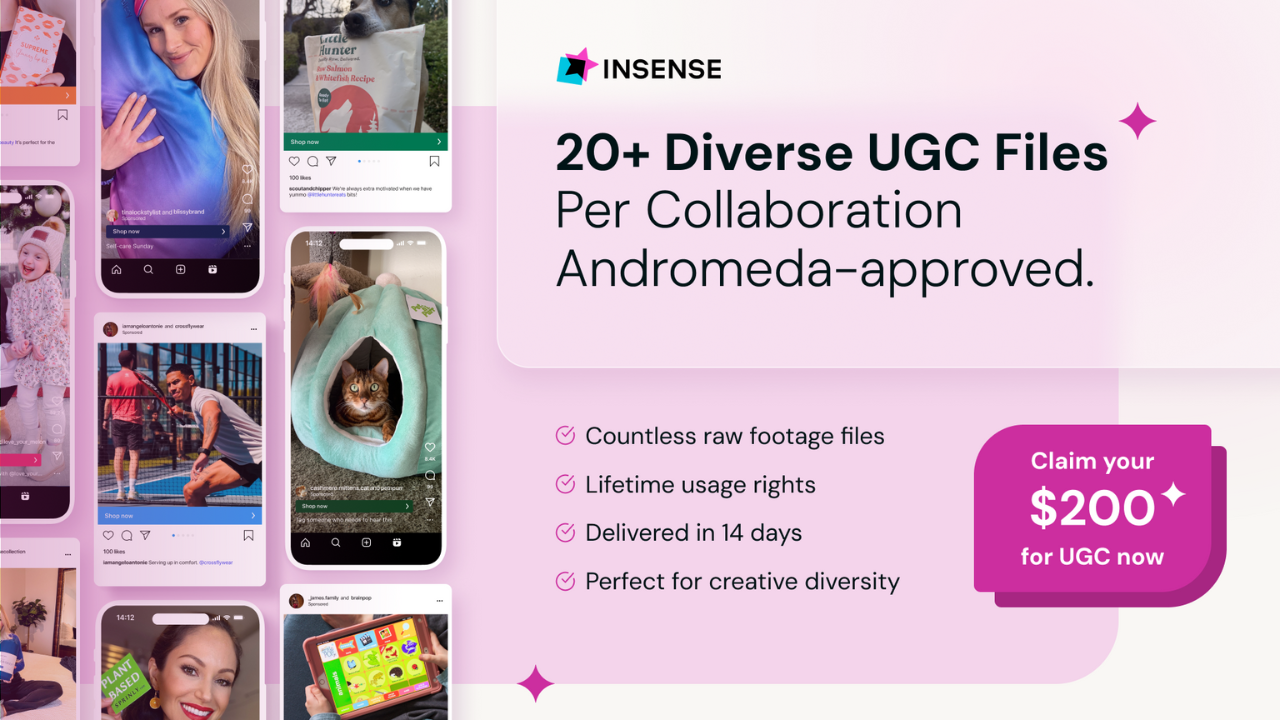
This is the scramble phase of Q5, the moment when every ad dies at once and performance hinges on how fast you can ship fresh creatives. Doing nothing means pouring budget into creatives that stopped converting yesterday.
With Insense, one creator drop gives you enough raw footage to fuel an entire round of testing without blowing up your team’s bandwidth.
- 20+ raw assets per creator, you can turn into countless variations.
- Fast 14-day turnaround so you stay ahead of Q5 spend.
- Lifetime usage rights, so every winning cut keeps earning for months.
That’s why 2,000+ brands like Quip, Revolut, and Matys rely on Insense to scale UGC without killing bandwidth.
Book a free strategy call by January 9th and get $200 for your first campaign!
🤔The Q4 Belief Shift
Every year, the same panic repeats itself. Mid-December arrives. Shipping cutoffs pass. Dashboards dip. Brands assume demand collapsed and respond by pulling spend, freezing campaigns, and waiting for January.
That response misunderstands what actually broke. Demand did not disappear.
Belief did.
Specifically, belief in delivery certainty. This is the Q4 Belief Shift.
The Core Law
When delivery confidence collapses, persuasion stops working. Only certainty converts.
Customers do not stop wanting the product. They stop believing the outcome will arrive in time to fulfill the original intent. Once that belief breaks, continuing to sell the product as-is becomes irrelevant.
This is not a traffic problem. It is not a pricing problem. It is not a creative fatigue problem. It is a belief gap.
What Changes After the Shipping Cutoff
Before the cutoff, the dominant purchase motivation is external fulfillment. Gifts, Deadlines, Social Obligation
After the cutoff, that motivation expires. But desire does not. It simply re-segments into different intent buckets:
- Self-purchase instead of gifting
- Deferred gratification instead of immediate receipt
- Certainty over speed
- Psychological ownership over physical delivery
Brands that keep selling the same offer are speaking to a motivation that no longer exists.
The Correct Response: Offer Reframing, Not Demand Retreat
The Shift is simple.
Do not change the product. Change what the product represents.
Effective post-cutoff pivots include:
- Gift cards and instant access alternatives
- “Treat yourself” positioning
- January delivery framing as a benefit, not a compromise
- Digital bonuses, guides, or unlocks that provide immediate value
The traffic stays the same. The audience stays the same. Only the belief layer changes.
Why Pausing Is the Worst Move
Pausing spend during the belief gap creates two losses:
- You surrender a window where competitors go quiet
- You lose momentum heading into January, when rebuilding costs more than maintaining
The shipping cutoff is not a dead week. It is a filter.
Brands that adapt harvest demand that others misdiagnose. Brands that pause spend January trying to recover attention they willingly gave up.
The Strategic Payoff
Brands that apply the Q4 Belief Shift:
- Turn late December into a profitable transition window
- Maintain algorithmic momentum
- Enter January with warm demand instead of cold restarts
The mistake is assuming desire expires with logistics. It doesn’t.
Your customer’s desire didn’t expire. Your message did. Fix the belief, not the budget. That is the Shift.
😄 Do Faces Actually Help YouTube Thumbnails?
A viral claim suggests creators should remove their faces from thumbnails to boost views, but new data shows the reality is more nuanced. Performance depends on audience familiarity, niche, and how thumbnails translate into watch time.
The Breakdown:
1. Faces Are Neutral on Average - Across 300,000 viral videos, thumbnails with faces and without faces performed similarly overall. Faces are common, but they are not a guaranteed advantage or disadvantage by default.
2. Context Changes the Outcome - Faces showed modest benefits for larger channels and certain niches like Finance, while hurting others like Business. Thumbnails featuring multiple faces consistently outperformed single-face versions.
3. Watch Time Beats Clicks - YouTube evaluates thumbnails based on watch time, not CTR alone, to discourage clickbait. A thumbnail that earns clicks but loses viewers quickly will underperform in testing.
There is no universal thumbnail rule. Subscribers respond to familiar faces, while new viewers prioritize clear ideas and emotion. Faces work best when they match the video’s opening and overall packaging. Creators are better served by validating thumbnails through watch time, not assumptions.
Together with The Shift
Turn AI from “Interesting” to “Impactful”
If you’ve ever thought, “That’s cool, but how would I actually use it?”
The Shift is for you. Here’s what you’ll get:
- Easy-to-follow breakdowns of even the most complex AI concepts.
- Real strategies you can apply in minutes, no tech degree required.
- Bonus access to 3,000+ AI tools, free courses, and prompt libraries.
Every edition is built for action, so you can improve campaigns, speed up workflows, or launch ideas faster than ever before.
You don’t just “learn AI” here. You make it work for you.
🏆 Ad of the Day

What Works:
1. Lived-In Luxury - Nothing feels staged or showroom-polished. The slightly imperfect tree and real furniture layout signal a home that’s actually used, which makes the brand feel aspirational but attainable.
2. Season Before Product - There’s no hard product push upfront. The feeling of Christmas warmth comes first, so when the brand name lands, it inherits the emotion instead of competing for attention.
3. Brand as Host - “Have a Coley Home Christmas” frames the brand as a host, not a seller, shifting makes buying feel like participation in a tradition, not a transaction.
This ad wins by selling atmosphere, not objects. It lets the viewer emotionally arrive first, then quietly offers the brand as the place where that feeling lives.
Advertise with Us
Wanna put out your message in front of over 50,000 best marketers and decision makers?
We are concerned about everything DTC and its winning strategies. If you liked what you read, why not join the 50k+ marketers from 13k+ DTC brands who have already subscribed? Just follow this.
At ScaleUP, we care about our readers and want to provide the best possible experience. That's why we always look for ways to improve our content and connect with our audience. If you'd like to stay in touch, be sure to follow us EVERYWHERE🥰
Thanks for your support :) We'll be back again with more such content 🥳