
You obsess over data but forget the signal


Howdy readers 🥰
In this newsletter, you’ll find:
📊Your Creative Testing Framework Is Producing Data. It's not producing a signal.
🛍️ Meta and Snapchat Just Made Big Moves in In-App Shopping
🏆 Ad of the Day
If you’re new to ScaleUP, then a hearty welcome! You and 50k+ CEOs, CMOS, and marketers have reached the right place. Let’s get into it, shall we? Oh! Before you forget, if someone forwarded this newsletter to you, don't forget to subscribe to our newsletter so you never miss out!
Together with Galactic Fed
You've tried everything. You haven't tried this.

If you've tried everything and growth still isn't happening, there's probably one blind spot hiding in plain sight.
Galactic Fed finds it. Their team audits your site and channels, then hands you a custom blueprint built from managing millions in spend across 600+ eCommerce brands. Real people spend hours on your account before you even get on the call.
Here's what's inside:
- A channel audit showing exactly where your budget is underperforming
- A custom growth plan built from 600+ brands worth of real data
- Competitor breakdown with the specific moves to get ahead
HVMN grew organic site visitors 583% through a targeted SEO strategy. Ruby Love generated $600k in sales and grew revenue 300% through email. Both were built the same way your plan will be.
It's free, personalized, and slots are limited to 10.
📊Your Creative Testing Framework Is Producing Data. It's not producing a signal.
There's a difference. Most accounts never figure out which one they're running.
Here's the tell: if your testing process can't tell you why a creative won, it's not a framework. It's a lottery with extra steps.
The brief → test → validate structure sounds obvious. The execution is where seven-figure accounts consistently break down, and it's almost never where they think.
The brief problem nobody names
Most creative briefs are format documents disguised as strategic documents. They tell production what to make. They don't tell the algorithm what signal to look for.
A hypothesis-led brief does one thing differently: it defines the conversion lever before spend touches it. Message hypothesis or format hypothesis. Never both.
The moment you test a new hook and a new visual treatment in the same asset, you've created an unresolvable variable. You'll know something worked. You won't know what.
That ambiguity compounds. Three testing cycles in, your "winning creative library" is a collection of things that beat weak controls under specific spend conditions, not a map of what actually converts your customer.
The threshold most accounts set is too low
50 purchase events before calling a winner is the floor, not the benchmark. At sub-$100 AOV with healthy volume, 100+ events is where statistical noise starts to separate from the genuine signal. Most accounts pull the trigger at 20–30.
The result: CBO inherits false positives. It doesn't know they're false. It scales them. ROAS holds for two weeks because spend is consolidating. Then it drops, and everyone blames creative fatigue. It wasn't fatigue. It was the noise that got the budget.
What CBO is actually doing to your test results
CBO doesn't find winners. It finds efficiency, which is not the same thing as the validation stage.
Given mixed creative quality, CBO will consolidate spend into whatever clears its short-term efficiency threshold fastest. In a cold testing environment, that's often the safest creative, not the highest-potential one. Bold hooks, pattern-interrupt formats, and direct-response angles that need 3–5 days to exit the learning phase get starved before they have a chance to prove out.
ABO with forced equal exposure isn't just best practice. It's the only environment where genuinely disruptive creative gets a fair test.
Grapevine's whitelisting model addresses a related problem. When you test through creator handles, you remove brand familiarity as a confounding variable. You're measuring cold conversion mechanics, not brand equity. You can book a free strategy call for your first campaign strategy session - no commitment required.
The validation gate most frameworks skip
Before any creative touches CBO, it should clear three things: spend threshold, purchase event minimum, and a hook-to-landing-page message match audit. That last one is almost never formalized.
A creative can win at the hook stage and leak conversion at the landing page. Platform ROAS won't show you that. Blended MER will, quietly, two weeks later, after you've already scaled the asset.
The framework isn't brief → test → validate.
It's brief → isolate → threshold → audit → validate → scale.
Two extra steps. Most of the money is in those two steps.
🛍️ Meta and Snapchat Just Made Big Moves in In-App Shopping
Two major platforms dropped commerce updates this week, pulling different levers to turn social engagement into direct transactions.
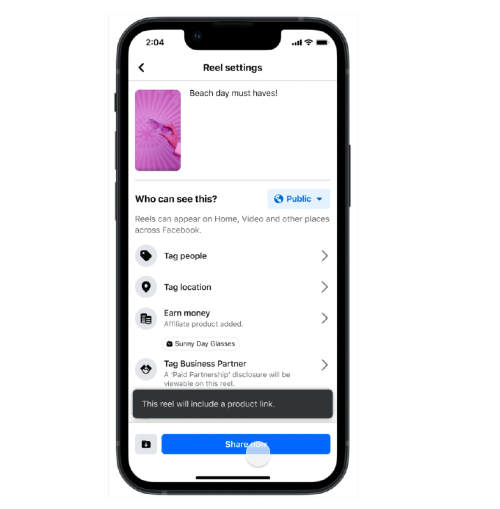
Meta Expands Affiliate Access and Checkout
Meta's affiliate program now includes eBay, Temu, and Mercado Libre alongside Amazon and Shopee. This spring, creators in 22 countries will be able to tag products directly inside Reels, with Instagram affiliate testing starting in the US and Asia.
Meta is also rolling out one-tap checkout through PayPal and Stripe, making it easier for users to buy without leaving the app. Facebook Shops is expanding to seven new markets including the UK, Japan, and Australia.
Snapchat Rolls Out New Ad Formats
Snap's new Total Takeovers give a brand the first ad slot across every tab in the app at once, useful for product launches or big campaign moments.
Snap also added an Offers feature that puts brand deals directly inside ads, reducing friction between seeing a product and buying it. Dynamic Product Ads now support new formats, with early results showing strong returns for commerce brands testing them.
Both platforms are clearly pushing harder into shopping. For brands already active on either, these updates are worth testing sooner rather than later.
🏆 Ad of the Day
What Works:
The Hidden Conversion Mechanism
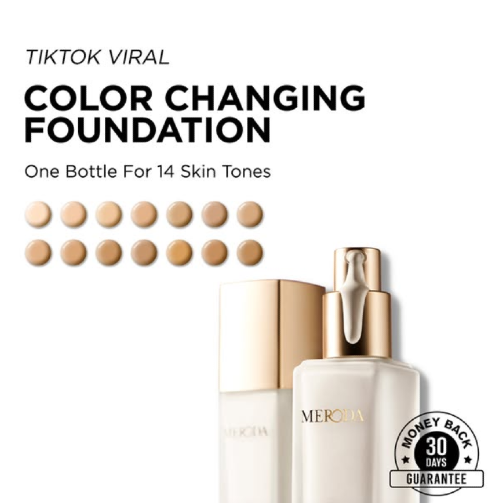
This ad collapses the decision complexity of shade matching, which is one of the biggest hidden drop-offs in beauty. “One bottle for 14 skin tones” removes the anxiety of choosing wrong, turning a high-friction category into a one-click decision.
The shade dots act as visual proof of adaptability, not just variety, showing transformation without needing a demo.
“TikTok viral” isn’t hype; it signals pre-validated discovery, making the product feel already chosen by others.
Find the most annoying decision in your category and eliminate it entirely, not optimize it.
Advertise with Us
Wanna put out your message in front of over 50,000 best marketers and decision makers?
We are concerned about everything DTC and its winning strategies. If you liked what you read, why not join the 50k+ marketers from 13k+ DTC brands who have already subscribed? Just follow this.
At ScaleUP, we care about our readers and want to provide the best possible experience. That's why we always look for ways to improve our content and connect with our audience. If you'd like to stay in touch, be sure to follow us EVERYWHERE🥰
Thanks for your support :) We'll be back again with more such content 🥳