
AI visibility is a probability.
📊Query the same question ten times on Google and get one answer. Do the same on an AI platform and get ten; AI advertising meets a trust test, and more!


Howdy readers 🥰
In this newsletter, you’ll find:
📊AI visibility isn’t a position it’s a probability.
📢 AI advertising meets a trust test
🏆 Ad of the day
If you’re new to ScaleUP, then a hearty welcome! You and 50k+ CEOs, CMOS, and marketers have reached the right place. Let’s get into it, shall we? Oh! Before you forget, if someone forwarded this newsletter to you, don't forget to subscribe to our newsletter so you never miss out!
Together with Omnisend
Your AI Is Missing Your Best Marketing Data
Your email platform holds the data behind better campaign decisions. By the time you’ve translated the numbers for your team, the next campaign is already underway.
Omnisend’s guide shows 10 ways to connect ChatGPT and Claude to your account data and reach decisions faster.
- Compare this week’s performance with last week’s and get changes explained in plain English.
- Analyze six months of subject lines to uncover the wording patterns your audience consistently opens.
- Generate a monthly executive summary with priorities, without losing another afternoon to reporting.
The guide comes from a platform used by 150,000+ ecommerce brands, whose customers average $79 in revenue for every $1 spent across Omnisend channels.
Users can get a free migration completed in five business days, with pricing up to 35% lower than Klaviyo at comparable tiers.
See what becomes possible when AI can work with your real email data, then decide whether your current platform is keeping up.
📊AI visibility isn’t a position; it’s a probability.
Traditional rank tracking works because the result is reasonably stable within a short window. AI search breaks that assumption.
Run the same prompt repeatedly, and the sources, recommendations, and framing can change between answers, which means checking once and recording whether the brand appeared creates confidence from a sample that was never large enough to support it.
Stop repeating the prompt. Stress-test the topic.
Five identical runs tell you about volatility around one wording. Five different formulations tell you whether the brand survives the ways buyers actually express the same intent.
Take one core question and deliberately push it through different contexts:
- Direct: What are the best accounting tools for startups?
- Comparison: X vs Y for an early-stage startup?
- Use case: Best accounting software for a five-person company?
- Follow-up: Which of those is easiest to implement?
- Skeptical: Which accounting tools aren’t worth paying for yet?
If the brand survives several of those shifts, that’s much stronger evidence than appearing repeatedly against one carefully chosen prompt.
Turn five runs into an investment ladder
Not every citation result deserves the same response. A simple confidence system prevents teams from spending equal effort everywhere.
4 to 5 appearances: defend it. The association is holding across different formulations, so keep the underlying content current and protect whatever third-party coverage is reinforcing it.
2 to 3 appearances: investigate it. This is often the most valuable group because the brand has already established enough relevance to appear, but something is preventing that relevance from holding consistently.
0 to 1 appearance: don’t automatically rewrite the page. At this level, the problem may be broader authority, source coverage, or whether the brand belongs in the answer at all. More polishing isn’t necessarily the highest-return move.
The middle tier is where the easiest visibility gains can hide.
Read the losses, not just the score
Suppose a brand finishes 3/5.
That number isn’t the diagnosis. Open the two losing answers.
If both losses came from comparison prompts, inspect whether competitors have clearer comparison pages or stronger third-party validation. If skeptical prompts consistently replace the brand, look at whether independent reviews surface the objections buyers are asking about. If direct questions work but use-case prompts fail, the content may explain the product well without establishing who it’s specifically for.
Now a volatile citation score becomes a content brief rather than another dashboard metric.
Doing this across dozens of topics becomes difficult to maintain manually. Semrush’s AI Visibility Toolkit tracks brand visibility across AI search surfaces, making repeated citation patterns easier to monitor alongside the competitors replacing you when visibility changes. You can try it for free for 7 days.
One AI answer tells you that you appeared once. The useful information starts when you understand which versions of the buyer’s question keep bringing you back, and which ones consistently make you disappear.
📢 AI advertising meets a trust test
AI advertising is expanding across ChatGPT and Google while paid search remains surprisingly resilient. But technical issues and growing public anxiety show that monetization is moving faster than consumer confidence.
The Breakdown:
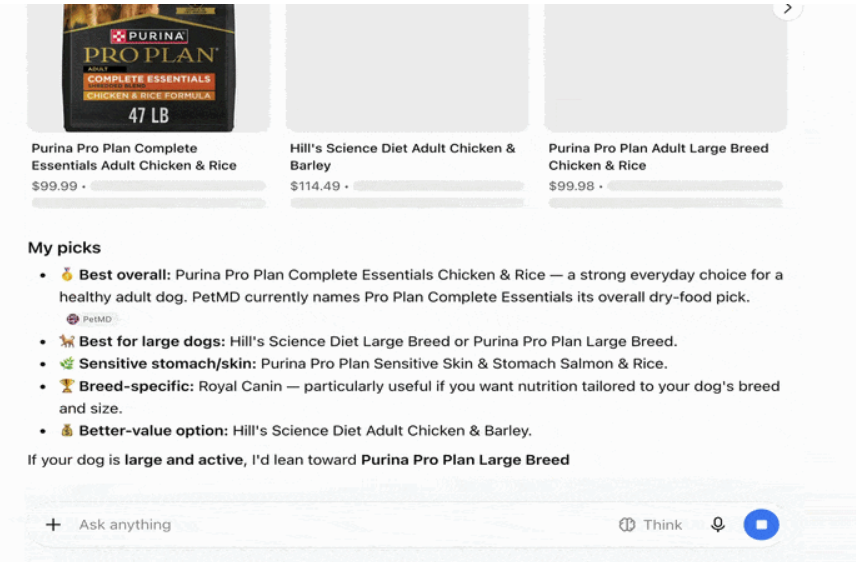
1. ChatGPT Ads Reach Europe - OpenAI says ads reach Free and Go users in the EEA and Switzerland later this month. Targeting starts contextual, while personalization requires opt-in and sensitive topics are excluded.
2. ChatGPT Ads Glitch - Brodie Clark spotted ads switching advertisers mid-load, potentially creating questionable impressions where one advertiser briefly appears before another replaces it. It highlights early growing pains in OpenAI's ad infrastructure.
3. Google Still Drives ChatGPT - Across 13.1B Google search events, ChatGPT had the highest paid-click share among major destinations. Google's zero-click rate rose 2.6 points and organic clicks fell 2.8, while paid clicks stayed flat.
4. AI Ads Are Spreading - Similarweb says sponsored ads appear in 26% of ChatGPT responses, while nearly 30% of ad-eligible Google AI Mode queries show ads, signaling rapid commercialization of AI interfaces.
5. Public Trust Weakens - Pew found 52% of Americans are more concerned than excited about AI, including 55% of under-30s. More significantly, 71% believe AI will result in fewer jobs over 20 years.
AI is quickly becoming a serious advertising channel across search and chat. The bigger challenge may be whether monetization can scale without further weakening the public trust these platforms depend on.
🎥 Ad of the Day
What Works:
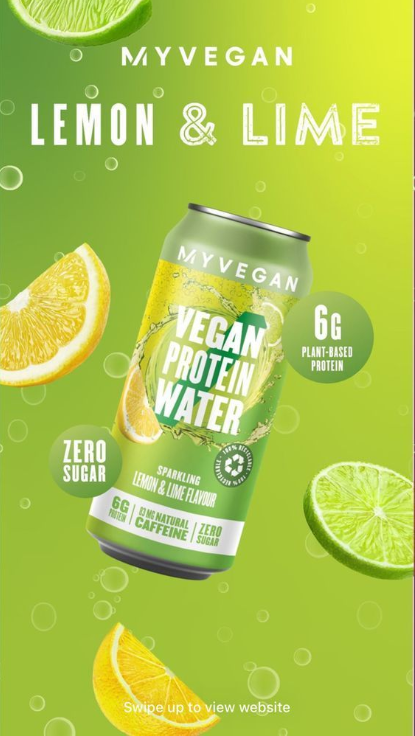
Flavor Stops Scroll - The saturated citrus palette and oversized lemon-lime imagery create an immediate sensory pattern interrupt, making the drink feel refreshing before shoppers even process the functional benefits
Benefits Scan Fast - “6g protein” and “zero sugar” sit in isolated callouts, reducing cognitive load and helping mobile viewers understand the product’s nutritional value within seconds.
Product Owns Center - The tilted can dominates the visual hierarchy, while floating fruit and bubbles frame it naturally, strengthening branding recall and making the product feel energetic and refreshing.
Use oversized ingredients, bubbles, splashes, or texture cues around the pack so shoppers can almost taste the product before reading the copy.
Advertise with Us
Wanna put out your message in front of over 50,000 best marketers and decision makers?
We are concerned about everything DTC and its winning strategies. If you liked what you read, why not join the 50k+ marketers from 13k+ DTC brands who have already subscribed? Just follow this.
At ScaleUP, we care about our readers and want to provide the best possible experience. That's why we always look for ways to improve our content and connect with our audience. If you'd like to stay in touch, be sure to follow us EVERYWHERE🥰
Thanks for your support :) We'll be back again with more such content 🥳