
Grade last year's BFCM emails
📊 Which of last year’s Black Friday emails deserve another run, Google warns against fake authors and reveals how long SEO changes take, and more!


Howdy readers 🥰
In this newsletter, you’ll find:
📊 Which of last year's black friday emails deserve another run
🔍 Google warns against fake authors and reveals how long SEO changes take
🏆 Ad of the day
If you’re new to ScaleUP, then a hearty welcome! You and 50k+ CEOs, CMOS, and marketers have reached the right place. Let’s get into it, shall we? Oh! Before you forget, if someone forwarded this newsletter to you, don't forget to subscribe to our newsletter so you never miss out!
Together with SurveyMonkey
SurveyMonkey Will Do the Research for Your Next Campaign
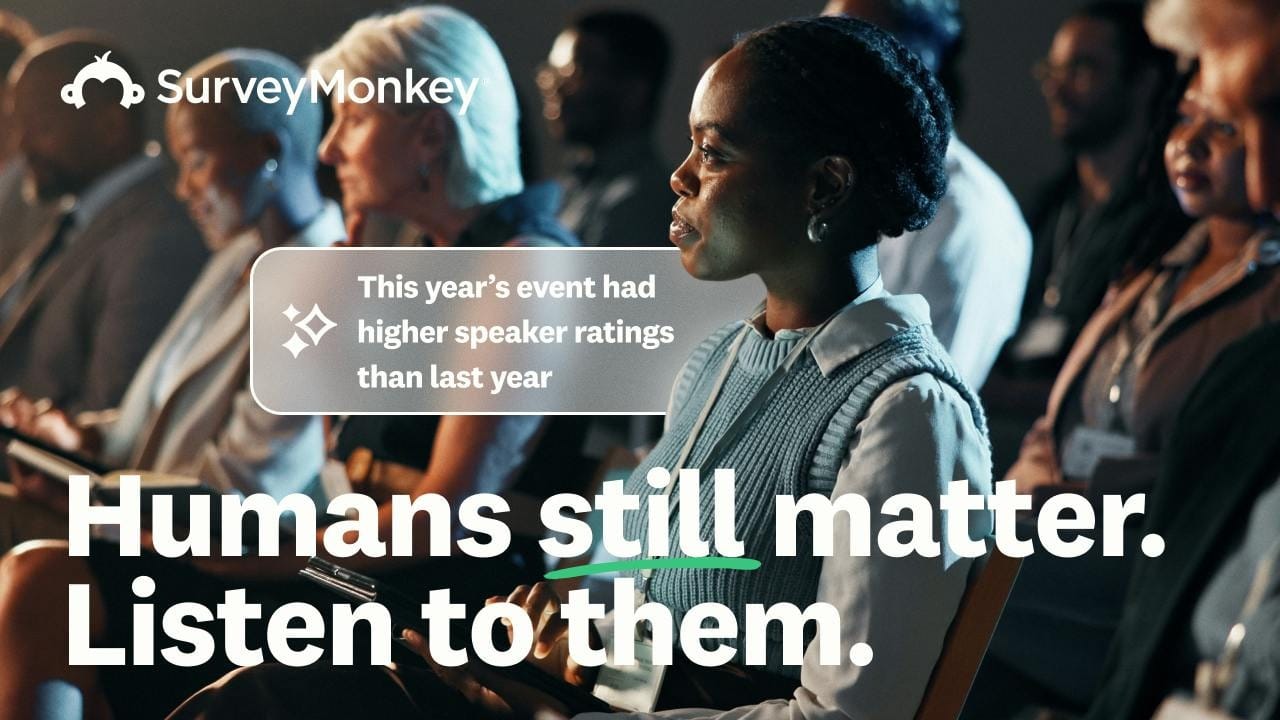
Before you approve the next campaign, find out whether buyers respond to its message. That feedback is far more useful while you can still change the creative.
SurveyMonkey does the research work for you. Set up your study and select your audience. It handles paid-panel recruitment and automatically analyzes the responses.
- Compare up to 10 messages with your target audience to decide which deserves your campaign budget.
- Get your creative evaluated against industry benchmarks, with findings that show what needs improving before launch.
- Discover which product benefits buyers prioritize, so your ads and landing pages emphasize what matters to them.
With a multimillion-dollar Super Bowl campaign at stake, ClickUp used SurveyMonkey to test its ad with 5,000+ people in less than a week before choosing which version to air.
Give your next creative brief customer evidence your team can act on before production and media costs are committed.
📊 Which of last year's black friday emails deserve another run
Ask which BFCM email performed best and most teams point to the one with the highest revenue. That campaign often gave away the deepest discount and lost the most subscribers doing it.
Score every campaign on what it actually left behind.
The formula
Net value per 1,000 sends = (revenue − discount cost − unsubscribe cost) ÷ sends × 1,000
Unsubscribe cost is unsubscribes multiplied by what one subscriber is worth. Divide last year's email revenue by your average list size. If you earned $600,000 from a 150,000-person list, each subscriber is worth $4 a year.
Discount cost is the total markdown buyers received on orders from that email, which your order data reports line by line.
A worked comparison
Both campaigns went to 100,000 people.
Campaign A: $42,000 revenue, 9,000indiscounts,600unsubscribes(2,400). Net value: $306 per 1,000.
Campaign B: $51,000 revenue, 18,000indiscounts,1,500unsubscribes(6,000). Net value: $270 per 1,000.
B looked like the winner in the dashboard. A left you with more.
Pulling these numbers by hand takes an afternoon. Omnisend connects with Claude or ChatGPT, so you can ask for last year's campaign results in the chat and work through the scoring there, and its BFCM AI playbook has ready-made prompts for this audit. You can try the BFCM prompts.
Compare like with like
Black Friday morning sells itself. Score each email against others sent in the same slot, such as Friday mornings or Cyber Monday evenings, and not against a Tuesday warm-up.
Attributed revenue also includes buyers who would have purchased anyway. Use the scores to rank campaigns against each other.
The rerun rule
- Top third: rerun with the same offer and timing.
- Middle third: change one thing, usually the offer depth or subject line, and rerun.
- Bottom third: retire it, unless it was the only email in its slot.
- Any campaign with unsubscribes above 0.5% of sends: retire it regardless of score. That cutoff is my judgment.
Make next year's audit easier
On October 1, Shopify added notes to Shopify Analytics. Teams can now pin context, such as campaign launches and promotions, directly onto time-series reports.
Use it this season. Log each send, any offer change and any site slowdown as it happens. Next October, a revenue spike comes with its explanation attached.
Pull last year's five biggest BFCM sends, calculate net value per 1,000 and sort. The order will probably differ from the one in your head.
🔍 Google warns against fake authors and reveals how long SEO changes take
Google has updated its helpful content guidance to address deceptive author profiles, while new insights from Search Central Live reveal how long crawling, indexing and SEO recovery can take.
The Breakdown:
Fake Author Profiles Signal Low Quality - Google now warns against AI-generated headshots, invented names, and false credentials used to make content appear written by human experts. Such deception signals low-quality content to Google's automated systems.
Fake Expertise Can Hurt Content Trust - Google's quality rater guidelines already instruct reviewers to give deceptive author profiles the Lowest quality rating. The new guidance extends this warning directly to site owners, although author bylines themselves are not a ranking factor.
Crawling and Indexing Take Time - Google typically discovers new URLs in 20 hours, refreshes known pages in around 30 days, and processes sitemaps within 24 hours, according to a conference attendee's recap. These timelines are estimates, not guarantees.
SEO Recovery Can Take Months - Title updates typically take 1–2 days, canonical changes 1–3 weeks, and site migrations 1–3 months. Recovering from a core update can take 3–6 months, sometimes extending to a year.
Google's guidance puts greater emphasis on authentic authorship while providing clearer expectations for SEO changes. Publishers should verify author credentials and avoid misleading profiles, while SEO teams need to account for crawling delays and longer recovery periods when evaluating results.
🎥 Ad of the Day

What Works:
Contrarian Hook Stops - “Don’t buy this serum” creates an immediate pattern interrupt, using reverse psychology to earn attention before flipping into a clear 28-day skin outcome.
Outcome Feels Specific - “Clear, stable skin in 28 days” gives shoppers a concrete timeframe, strengthening message-market fit while making the serum’s promise feel easier to evaluate.
Benefits Scan Fast - The three bottom callouts quickly communicate barrier repair, hydration and under-eye support, reducing cognitive load while reinforcing the serum’s multi-benefit positioning.
Open with a negative command, then immediately reveal the desirable outcome. Contrarian framing can increase thumb-stop ratio while making familiar product benefits feel less predictable.
Advertise with Us
Wanna put out your message in front of over 50,000 best marketers and decision makers?
We are concerned about everything DTC and its winning strategies. If you liked what you read, why not join the 50k+ marketers from 13k+ DTC brands who have already subscribed? Just follow this.
At ScaleUP, we care about our readers and want to provide the best possible experience. That's why we always look for ways to improve our content and connect with our audience. If you'd like to stay in touch, be sure to follow us EVERYWHERE🥰
Thanks for your support :) We'll be back again with more such content 🥳