
Incrementality tests failing?
👀 The Reason Two Quarters of Incrementality Testing Changed Nothing, and Meta Doubles Down On Reach And AI Advertising


Howdy readers 🥰

In this newsletter, you’ll find:
👀 The Reason Two Quarters of Incrementality Testing Changed Nothing
📈 Meta Doubles Down On Reach And AI Advertising
🎥 Ad of the Day
💃 Events
If you’re new to ScaleUP, then a hearty welcome! You and 50k+ CEOs, CMOS, and marketers have reached the right place. Let’s get into it, shall we? Oh! Before you forget, if someone forwarded this newsletter to you, don't forget to subscribe to our newsletter so you never miss out!
Together with Omnisend
The AI prompt that writes your monthly email report for you

Want your monthly marketing report without spending an afternoon on it? Now that Omnisend works with Claude and ChatGPT, you can just ask for it.
Ask your AI: "Give me a monthly summary of my Omnisend account I can share with my team. What worked, what didn't, how this month compared to last month across campaigns, automations, revenue, and subscribers, and what we should focus on next month."
It reads your real account and hands back a report that's ready to send, not a template you still have to fill in.
Not using Omnisend yet? Join more than 150,000 brands generating an average of $79 for every $1 spent.
Migration is free and takes up to five days, while pricing is up to 35% lower than Klaviyo's.
👀 The Reason Two Quarters of Incrementality Testing Changed Nothing
Incrementality testing should end with a budget decision, not another meeting. If a study is done well, the outcome is usually straightforward: invest more because you’ve found incremental growth, reallocate budget because another tactic performs better, or cut spend because the channel wasn’t driving demand in the first place.
Yet many teams spend months running holdout tests and MMM studies only to leave every budget untouched. The measurement isn’t usually what failed. The decision process is.

If none of those happen, the study produced information, not a business decision.
Where the process usually breaks
The sequence looks harmless.
- Run the test.
- Review the results.
- Decide what they mean.
- Decide what to do.
The mistake is hiding in steps three and four.
A result showing retargeting at 0.6x incremental ROAS isn’t ambiguous. The debate begins because nobody agreed beforehand whether 0.6x was good enough to keep funding. Finance wants another quarter. Marketing wants another market. Leadership asks for one more validation cycle. The conversation shifts from evaluating the channel to negotiating the threshold.
The measurement didn’t fail.
The governance did.
Write the decision before you know the answer
Every incrementality study should begin with a page that looks something like this:

Those rules are easy to agree on while the outcome is still unknown.
They’re remarkably difficult to rewrite once everyone knows which budget is about to lose funding.
Don’t just identify the budget. Identify its destination.
Finding non-incremental spend answers only half the question.
The other half should already be documented. If Channel A loses $100,000, where does it go?
Search? Meta prospecting? Affiliate? CRM?
Leaving that decision until after the study guarantees another round of meetings, another round of opinions and another month where nothing changes despite everyone agreeing with the findings.
Before commissioning the next incrementality study, make sure four things already exist:
- A threshold that triggers action.
- A predefined budget movement for every outcome.
- An owner responsible for making that change.
- A deadline for when the reallocation happens.
Incrementality shouldn’t end with a presentation. It should end with money moving.
📈 Meta Doubles Down On Reach And AI Advertising
Meta is expanding its lead in social media while introducing new AI advertising tools and stronger measurement capabilities for retailers.
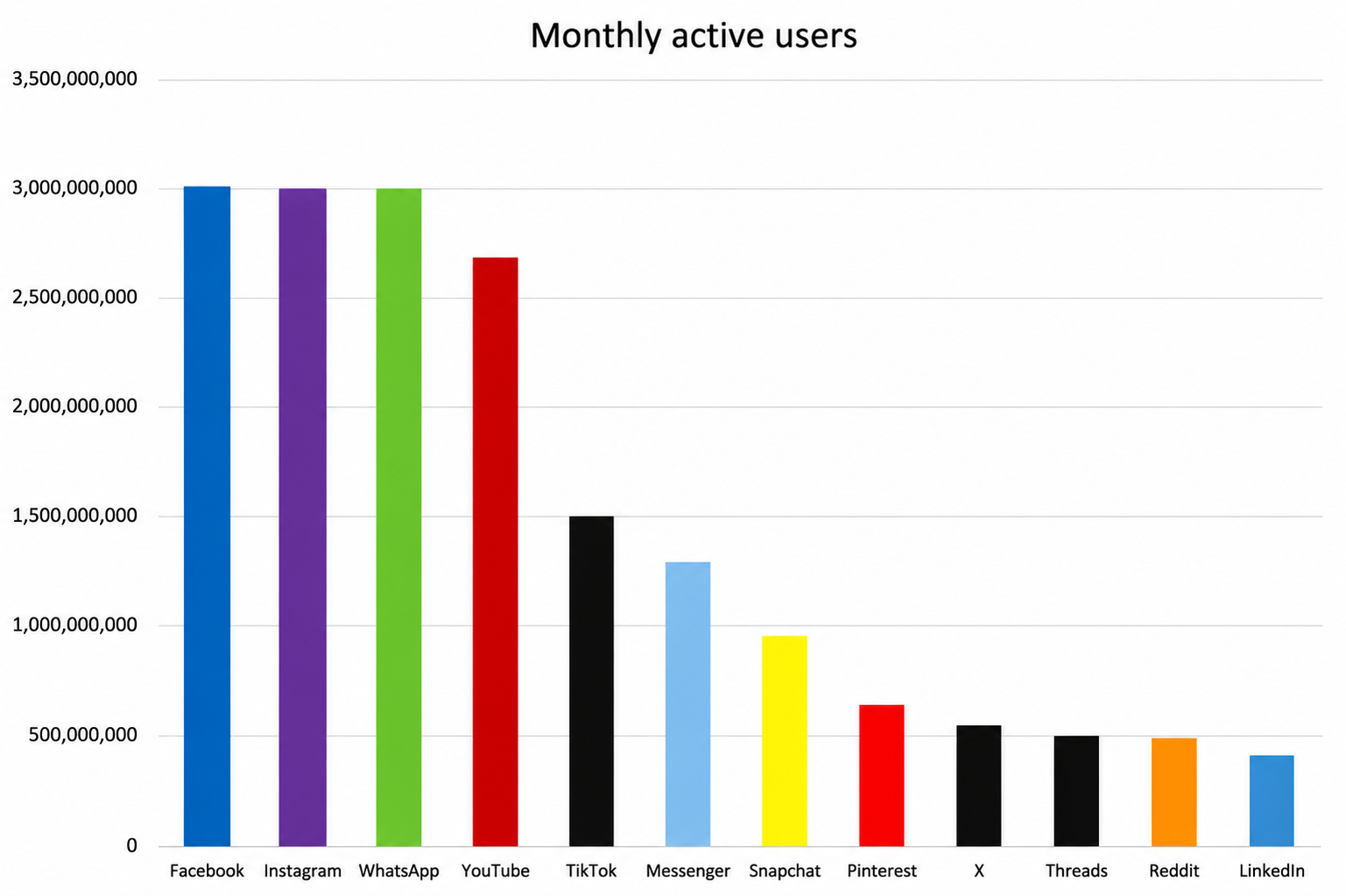
Meta’s audience keeps growing: Facebook, Instagram, and WhatsApp have each surpassed 3 billion monthly active users, giving Meta the broadest social reach.
Meanwhile, Threads has grown to 500 million users, continuing its rapid expansion.
AI can now rewrite your ad creatives: Meta’s updated Advantage+ Creative can generate new headline variations directly on existing ad images, preserving the original design, fonts, colors, and layout.
It also produces improved AI-generated copy that advertisers can edit before publishing.
Offline sales now feed Meta’s AI: Lightspeed has launched a direct integration with Meta’s Conversions API, allowing brick-and-mortar retailers to automatically send point-of-sale data into Meta.
This helps advertisers measure offline sales, improve attribution, and optimize campaigns using real in-store purchase data.
Why It Matters
Meta is strengthening its advertising ecosystem on multiple fronts. Its massive user base continues to attract marketers, while better AI creative tools and offline conversion tracking give advertisers more ways to improve campaign performance and measure real business outcomes.
🎥 Ad of the Day

What Works:
Value Gap Hooks - “Designer smell. Dupe receipt.” creates immediate price anchoring, positioning the fragrance as premium without the markup and giving value-conscious shoppers a strong reason to pause.
Receipt Proves Affordability - Turning the product into a printed receipt makes the $49 price impossible to miss, using a familiar purchase cue to strengthen offer clarity and reduce price uncertainty.
Ratings Build Confidence - The 4.8 rating and 300-plus shopper proof appear before the headline, adding credibility early while the restrained layout keeps the fragrance feeling polished and premium.
Pair a luxury-coded promise with a familiar price object like a receipt, tag or invoice. It makes affordability tangible without making the product feel discounted.
💃Events
🔥 How to Turn Your Pricing and Comparison Pages Into AI Citation Targets
August 5 | 2 PM ET | Virtual Event
Josh Grant, founder of StackedGTM and former VP of Growth at Webflow, joins AirOps’ Josh Spilker to show how to make high-intent pages easier for AI to extract, trust, and quote. Score your pages live and leave with the exact changes to make over the next 30 days.
Can't make it live? Register anyway, you'll get the recordings within 24hours.
Advertise with Us
Wanna put out your message in front of over 50,000 best marketers and decision makers?
We are concerned about everything DTC and its winning strategies. If you liked what you read, why not join the 50k+ marketers from 13k+ DTC brands who have already subscribed? Just follow this.
At ScaleUP, we care about our readers and want to provide the best possible experience. That's why we always look for ways to improve our content and connect with our audience. If you'd like to stay in touch, be sure to follow us EVERYWHERE🥰
Thanks for your support :) We'll be back again with more such content 🥳