
Plan for the BFCM spike
🧐The BFCM CPM spike is layered on top of a spike that already happened, ChatGPT and Gemini open new ad opportunities, and more!


Howdy readers 🥰

In this newsletter, you’ll find:
🧐Plan for the BFCM spike now
📢 AI Assistants Open New Ad Opportunities
🏆 Ad of the Day
If you’re new to ScaleUP, then a hearty welcome! You and 50k+ CEOs, CMOS, and marketers have reached the right place. Let’s get into it, shall we? Oh! Before you forget, if someone forwarded this newsletter to you, don't forget to subscribe to our newsletter so you never miss out!
Together with Omnisend
See What Your Email Account Needs in 30 Seconds
You probably know your open rate. The harder question is what needs fixing next, and finding that answer can take longer than the campaign itself.
Omnisend just made checking in a 30-second habit. It connects straight to Claude and ChatGPT, so you can ask your account what's going on, and Omnisend AI does the fixes for you without leaving the chat.
You don't even need to write the prompts yourself. There's a full library already built, sorted from beginner to advanced.
- Beginner: Get an instant health snapshot, rank campaigns by revenue, or check deliverability.
- Intermediate: Compare weekly performance, analyze subject-line patterns, locate automation revenue leaks, and do the fixes.
- Advanced: Score the complete account, build a re-engagement campaign for you, or replace two hours of monthly reporting.
Built on feedback from 150,000+ brands, Omnisend users generate an average of $79 for every $1 spent.
Switching takes zero effort since Omnisend migrates you for free within 5 days, and your bill drops up to 35%.
Connect your AI and run your first prompt today.
🧐Plan for the BFCM spike now
Before: most Q4 planning treats November's expensive CPMs as a seasonal event, a temporary spike to budget around and wait out, same as every year.
After: the seasonal spike is landing on top of a structural one that never reset. Industry CPMs now run roughly 89% above 2020 levels and peaked at $25.22 in November 2025, a baseline increase that compounds with, rather than resets before, the seasonal BFCM premium stacking on top of it every Q4 since.
The documented pattern from cross-brand CAC data: brands that did their acquisition and awareness preparation in May paid 15 to 20% less per acquisition in July than brands that scrambled in June, a six-to-eight-week head start converting directly into a double-digit cost advantage once the seasonal spike arrived.
The same logic applies to Q4. Waiting until October to start building demand means building it during the exact window when the structural and seasonal increases are both already priced into the auction.
The brands outperforming during BFCM aren't fighting harder inside that expensive window. They're creating demand before it opens, in channels competitors haven't fully tapped, so that by the time Meta, search, email, and affiliates all get expensive simultaneously in November, the demand already exists and digital is capturing it rather than manufacturing it from scratch at peak auction prices.
PATTERN Beauty built exactly this with Tatari: a phased 12-week campaign across streaming and linear, measuring revenue impact from day one rather than waiting on a delayed brand study.
The results: 58% growth in unique site visitors, a 3x revenue lift from month one to month three on comparable budgets. It gave digital more in-market demand to capture once BFCM's expensive window actually opened.
The math on when to start: if a demand-creation campaign needs roughly 12 weeks to build meaningful awareness and BFCM opens in late November, the planning conversation needs to happen in late August, not late September, and definitely not once October's own CPM creep has already started eating into the budget meant to fund it.
The brands still treating BFCM CPM spikes as a purely seasonal, wait-it-out event are the ones paying the compounded price twice, once on the structural baseline that never came back down, and again on the seasonal layer stacked directly on top of it. You can book a free demo here and build demand with TV before Q4 gets crowded.
📢 AI Assistants Open New Ad Opportunities
Three new developments from OpenAI, Google, and the broader AI market suggest advertising inside AI assistants is becoming a real channel. At the same time, brands can no longer rely on a single platform or a single visibility metric.
The Breakdown:
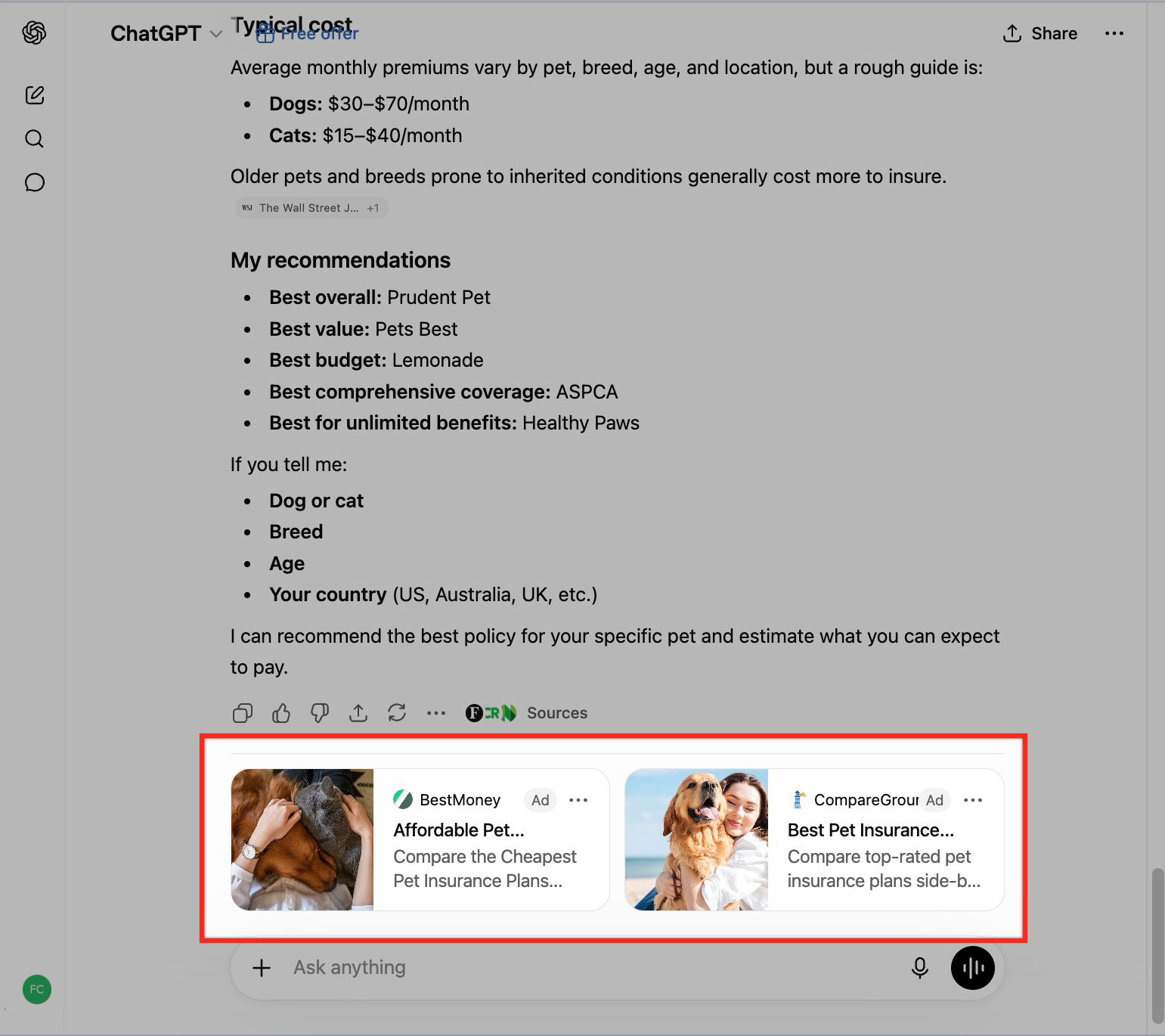
ChatGPT Expands Ads - OpenAI has started testing two ads from two different advertisers within a single ChatGPT response, marking the first major expansion of its ad inventory beyond a single sponsored placement.
Google Separates Ads From Citations - A new SE Ranking study found Google AI Mode displayed ads on 29% of commercial keywords, but advertisers appeared among AI-cited sources only 11% of the time, showing paid visibility and AI citations operate independently.
High-CPC Keywords Win More Ads - AI Mode showed ads more frequently for expensive keywords, with ad presence rising to 53.56% for keywords above $10 CPC, while search volume and keyword difficulty had little impact.
AI Audiences Are Fragmenting - ChatGPT's share of AI users fell below 50% for the first time as Gemini and Claude gained market share, suggesting brands should diversify both AI advertising and optimization efforts.
AI assistants are becoming a new advertising ecosystem, but success will depend on more than buying placements. Brands now need to track paid ads, AI citations, and platform reach separately as both visibility and audiences become increasingly fragmented.
🎥 Ad of the Day
What Works:
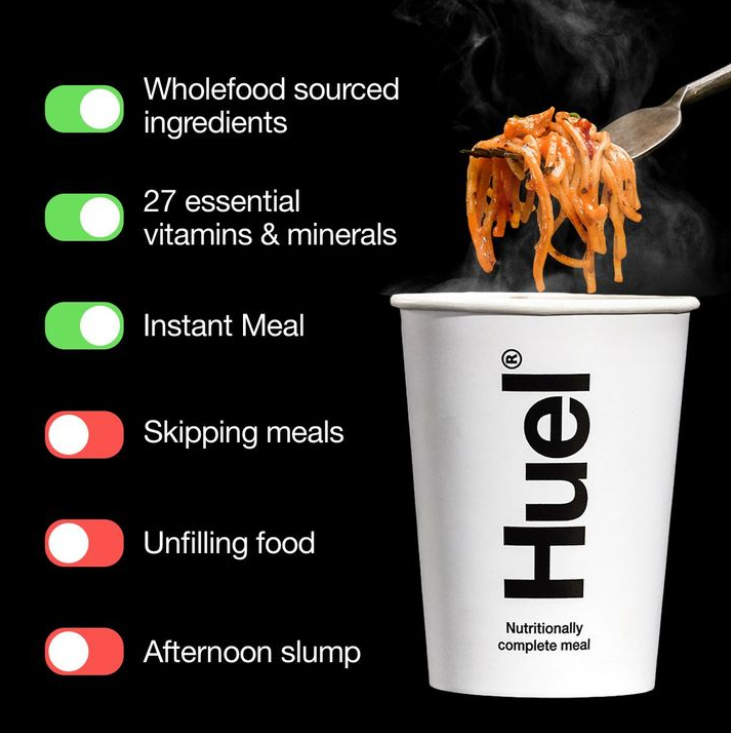
Toggles Simplify Benefits - The familiar toggle format turns product benefits into an instantly scannable comparison, reducing cognitive load while clearly positioning Huel as the positive alternative to common meal frustrations.
Contrast Drives Attention - The black background, bright green switches and steaming food create a strong pattern interrupt, while the white cup keeps visual hierarchy focused firmly on the product.
Objections Get Reframed - Pairing nutrients and convenience against skipped meals, unfulfilling food and afternoon slumps uses problem-solution framing to strengthen message-market fit and make the value feel immediate.
Show what customers gain and eliminate using a familiar interface or checklist. This makes the product’s value easier to process and reduces conversion friction quickly.
Advertise with Us
Wanna put out your message in front of over 50,000 best marketers and decision makers?
We are concerned about everything DTC and its winning strategies. If you liked what you read, why not join the 50k+ marketers from 13k+ DTC brands who have already subscribed? Just follow this.
At ScaleUP, we care about our readers and want to provide the best possible experience. That's why we always look for ways to improve our content and connect with our audience. If you'd like to stay in touch, be sure to follow us EVERYWHERE🥰
Thanks for your support :) We'll be back again with more such content 🥳