
Price each AI recommendation
🎯 A passing AI mention on a vague question is worth far less than a top pick on a buying question, so value them before you budget.


Howdy readers 🥰
In this newsletter, you’ll find:
🎯 Five steps to put a dollar value on each AI search recommendation
📊 Google Ads introduces five updates to bidding, AI max, and conversion tracking
🏆 Ad of the Day
If you’re new to ScaleUP, then a hearty welcome! You and 50k+ CEOs, CMOS, and marketers have reached the right place. Let’s get into it, shall we? Oh! Before you forget, if someone forwarded this newsletter to you, don't forget to subscribe to our newsletter so you never miss out!
Together with Omnisend
Your next customer already follows you. Stay in touch.

Someone follows your brand on Instagram because they like what you’re selling. But when your next launch or sale comes around, they might never see it.
Omnisend’s Instagram integration helps you capture that interest while it’s fresh. Social Capture automatically DMs anyone who comments or messages a keyword you’ve chosen, asking for their email.
Offer a discount to give them a reason to subscribe. Their email goes straight into your Omnisend list, ready for a welcome series that helps bring them closer to their first order.
No copying contacts or manually chasing replies. Social Capture is available on all paid plans.
New to Omnisend? Its e-commerce email and SMS platform is trusted by 150,000+ brands. Migration is free and takes up to five business days.
Give today’s interested followers a way to hear about tomorrow’s offer.
🎯 Five steps to put a dollar value on each AI search recommendation
AI answers now sit between shoppers and the click. Pew Research tracked 68,879 Google searches and found people clicked a link inside an AI summary on just 1% of visits. Yet Adobe measured AI-driven traffic to U.S. retail sites up 670% on Cyber Monday 2025. Shoppers are using these answers to decide, and many never click through to tell you.
So a budget built on "we were mentioned 400 times" will get cut. A mention in an answer to "best running shoes for flat feet under $150" is worth far more than one in "history of running shoes." Here's how to price the difference. Numbers are illustrative.
Step 1: List the questions your buyers ask
Write 40 real questions from sales calls, reviews, and support tickets. Tag each one by stage: research, comparison, or ready to buy.
Step 2: Weight each question by intent
Give ready-to-buy questions a weight of 1.0, comparison 0.5, and research 0.1. The weights are my judgment; keep them fixed once set.
Step 3: Measure your share of each answer
Run each question 10 times in each AI tool your buyers use and record the results separately. Your mention rate is the percentage of answers that name your brand. Named in five of ten answers means 50%. Track first-place recommendations separately rather than counting them twice. This measures your visibility in the test, not the percentage of real shoppers who saw you.
Step 4: Turn it into a value per question
Use a rough scenario: intent weight × tested mention rate × estimated monthly askers × assumed purchase rate × average order.
Suppose a ready-to-buy question has 2,000 monthly askers, your brand appears in 50% of test answers, 2% of the people who see it buy, and the average order is $90. That gives 1.0 × 0.5 × 2,000 × 0.02 × $90 = $1,800.
It assumes your test reflects real answers and that the audience and purchase estimates are right. Try a low and high estimate, and don't add overlapping questions together as though each reaches different shoppers.
On November 20 at 2 PM ET, AirOps' Matt Hammel, Paramark CEO Pranav Piyush, and Hitesh Wadhwani, who created Google's Meridian, dig into how much weight one AI recommendation should carry in a budget model. You can secure a free seat here.
Step 5: Spend where the gap is biggest
Prioritize relevant buying questions where your brand appears less often than competitors. Use the rough sales scenarios to choose a small content, review, or PR test. Then track whether visibility, qualified visits, and purchases improve before increasing the budget. A low mention rate is a reason to investigate, not proof of untapped revenue.
This week
Write your 40 questions and tag them by stage. Steps 2 through 5 take an afternoon once the list exists.
📊 Google Ads introduces five updates to bidding, AI max, and conversion tracking
Google Ads has rolled out several updates to make campaign management easier, improve transparency around invalid traffic, and help advertisers better understand their AI-powered campaigns.
The Breakdown:
- Google has shortened Smart Bidding's “Learning” status to seven days maximum. Budget, bidding target, creative, and targeting changes no longer trigger it, although campaign performance may still fluctuate.
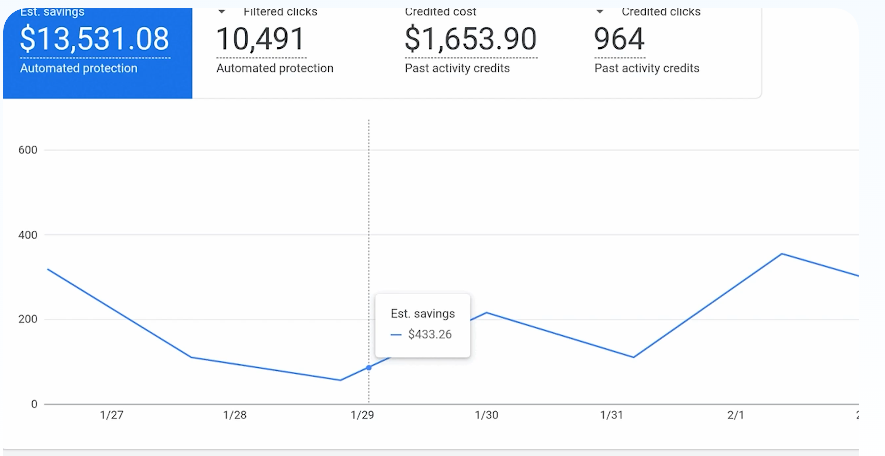
- The new Invalid Traffic Overview Card shows savings from blocked clicks and post-billing credits. Advertisers can view adjusted costs through the Invalid Activity Credit report.
- Google Ads Editor 2.14 enables AI Max by default for new Search campaigns, including automated ad text and landing pages. A new tracking parameter identifies AI Max expansion clicks.
- Google's Data Strength Uplift estimates additional conversions captured through first-party data. It requires at least 100 website or 20 offline conversions in 14 days and measures tracking improvements, not sales growth.
Google's latest updates give advertisers more visibility into bidding, AI-powered traffic, and conversion measurement. While managing campaigns is becoming easier, reviewing automation settings and monitoring performance remain important for making informed advertising decisions.
🎥 Ad of the Day

What Works:
Hands Create Motion - The four hands entering from different directions create instant visual movement, guiding attention across the product range while giving the static creative stronger thumb-stop potential.
Range Feels Coordinated - Showing multiple skincare SKUs in one consistent purple-and-white system communicates a complete routine, helping shoppers understand breadth while strengthening brand recall across the lineup.
Color Builds Identity - The green environment against purple packaging creates high contrast and a distinctive visual world, keeping the products easy to spot without making the layout feel overly busy.
Bring products into frame from multiple directions using hands. It adds energy, showcases several SKUs naturally, and creates stronger visual hierarchy than a flat lineup.
💃Events
🔥 Why Counting AI Mentions Could Be Costing You Marketing Budget
November 20 | 2 PM ET | Virtual Event
A passing brand mention and a direct AI recommendation shouldn't carry equal weight in your budget decisions. Paramark CEO Pranav Piyush and Google Meridian creator Hitesh Wadhwani explore how to measure meaningful exposure, account for AI search in marketing mix models, and build stronger evidence for investment.
Can't attend the session live? Register anyway, and you’ll get the recordings in 24 hours.
Advertise with Us
Wanna put out your message in front of over 50,000 best marketers and decision makers?
We are concerned about everything DTC and its winning strategies. If you liked what you read, why not join the 50k+ marketers from 13k+ DTC brands who have already subscribed? Just follow this.
At ScaleUP, we care about our readers and want to provide the best possible experience. That's why we always look for ways to improve our content and connect with our audience. If you'd like to stay in touch, be sure to follow us EVERYWHERE🥰
Thanks for your support :) We'll be back again with more such content 🥳