
Smart+ isn't all or nothing
⚙️ Module-level control replaced the all-in-or-out setup. Most advertisers never revisit their configuration to use it, plus the Media Buyer Index of the week and more!


Howdy readers 🥰
In this newsletter, you’ll find:
⚙️ Smart+ isn't all-or-nothing, and most advertisers are running it like it is
📊 Meta and Pinterest are leading returns, but only one of them is getting the budget it deserves
🏆 Ad of the day
If you’re new to ScaleUP, then a hearty welcome! You and 50k+ CEOs, CMOS, and marketers have reached the right place. Let’s get into it, shall we? Oh! Before you forget, if someone forwarded this newsletter to you, don't forget to subscribe to our newsletter so you never miss out!
Together with Insense
Your November Creator Roster Is Already Being Booked
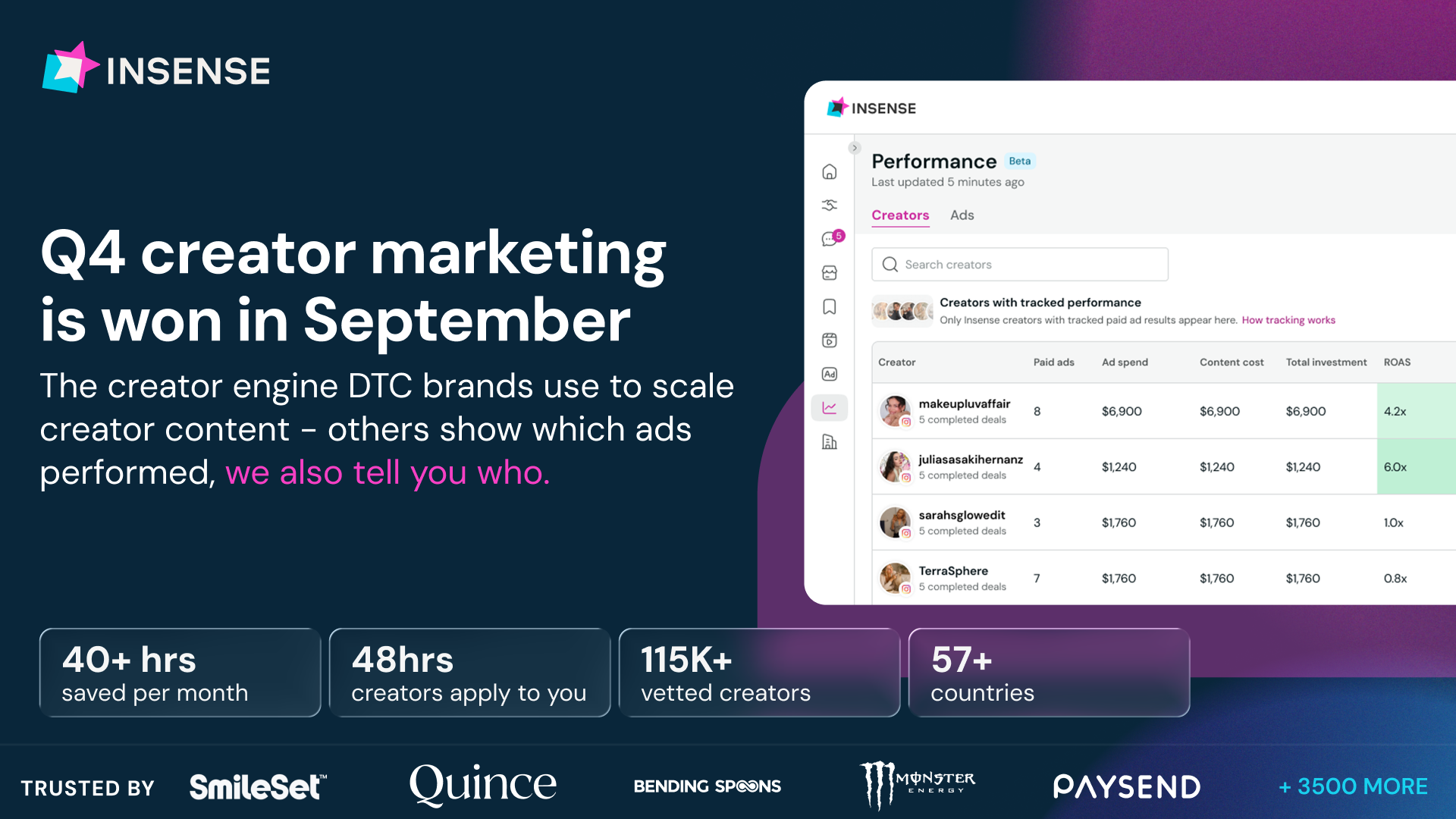
BFCM is an expensive time to discover a creator cannot sell your product. Late briefs and unusable assets leave your team scrambling as ad spend peaks.
Insense gives brands scaling beyond $2M a faster way to pressure-test their creator bench before peak season.
- Put products in creators’ hands early, so BFCM briefs come with product knowledge and content you already trust.
- Turn a $1,000 budget into up to 20 UGC ads from five creators, creating more hooks to test from every shoot.
- Connect Ads Manager to Insense’s performance dashboard to see which Partnership Ads and creators drive results, then rehire the strongest performers.
Insense provides access to 115,000+ creators across 57+ countries and is trusted by over 3500 brands like Il Makiage, Quince, Huda Beauty, and Monster Energy.
⚙️ Smart+ isn't all-or-nothing, and most advertisers are running it like it is
Smart+ launched as TikTok's fully automated campaign solution, and most advertisers treat that framing literally: turn it on, hand over targeting and budget decisions, accept whatever the automation decides across the campaign.
That's not actually how the tool works anymore. Automation now runs at the module level, meaning audience targeting, creative selection, budget pacing, and bidding can be individually automated or manually controlled within the same campaign, rather than forcing an all-in or all-out decision.
Most teams either avoid Smart+ entirely because full automation feels too risky to hand over blind, or run it fully automated. After all, that's how it was originally pitched, and nobody revisited the setup once module-level control became available. Both leave performance on the table.
Identify which decisions you actually trust the algorithm to make
Not every campaign decision benefits equally from automation. Budget pacing and bid optimization tend to be genuinely strong candidates, since the algorithm has more real-time signal than a human adjusting manually once a day.
Creative selection and audience definition are different, especially for a brand with strong brand-safety opinions or a narrow audience the algorithm hasn't seen enough data on yet. Map your campaign against these categories before deciding what to automate, rather than accepting or rejecting the whole system as one block.
Use the Auto-select layer as a research tool even where you keep manual control
TikTok's Auto-select feature scans existing ads and eligible creator content to surface what the algorithm identifies as high-performing assets, even in campaigns where other modules stay on manual control.
Run Auto-select's recommendations alongside your own manual creative choices for a cycle before fully trusting or dismissing it.
The signal is useful even for a team that wants final say over what runs, since it surfaces pattern matches a manual review might miss. If you're not yet running ads on the platform at all, get started with TikTok for Business before this decision gets made for you by default.
Revisit your Smart+ configuration now, not just at initial setup
A Smart+ setup configured months ago under the old all-or-nothing framing is very likely running with less control than the current version allows, simply because nobody went back to check what changed.
Auditing which modules are currently automated versus manual in your live campaigns, and rebuilding the split deliberately rather than by default, is worth doing before BFCM volume makes any misconfiguration expensive to leave uncorrected.
Full automation was never actually the only option. It was just the default nobody thought to question.
📊 Meta and Pinterest are leading returns, but only one of them is getting the budget it deserves
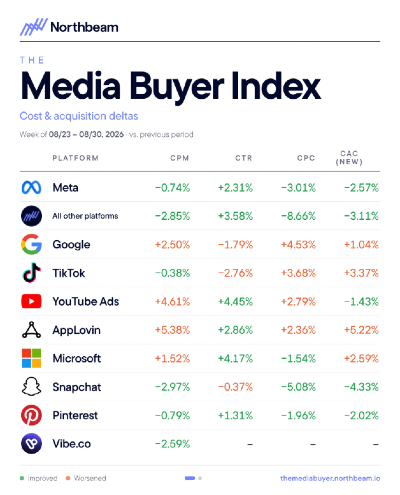
Last week delivered one of the more coherent efficiency setups in recent months, costs fell on several major platforms while returns improved meaningfully, creating a cleaner case for scaling decisions than the prior two weeks allowed.
The Breakdown:
CPC - Meta, Snapchat, and Pinterest all saw click costs fall, while Google and TikTok pushed higher; where CPCs dropped alongside improving ROAS like Meta, this is the week to push proven creatives harder rather than holding budget back out of cost caution.
CAC - Meta, YouTube, Snapchat, and Pinterest all improved while Google and TikTok worsened. Google's CAC deterioration despite growing share is worth flagging; audit which campaigns are driving the cost increase before adding more budget to the channel this cycle.
ROAS - Pinterest led at +11.47%, and Meta posted +10.22% while Snapchat barely held at -0.08%; both Pinterest and Meta are posting double-digit returns simultaneously, making this the clearest aligned scaling signal either channel has shown in several weeks.
Meta holds 53.53% of spend with +10.22% ROAS, the strongest return signal it has posted in over a month, and the first week in five where share and performance are genuinely aligned.
Pinterest at 0.52% posted +11.47% ROAS and remains structurally underfunded. Scale Meta with confidence, open a meaningful Pinterest test budget this week, and trim Google where CAC worsened despite share gains.
🏆 Ad of the day
What Works:
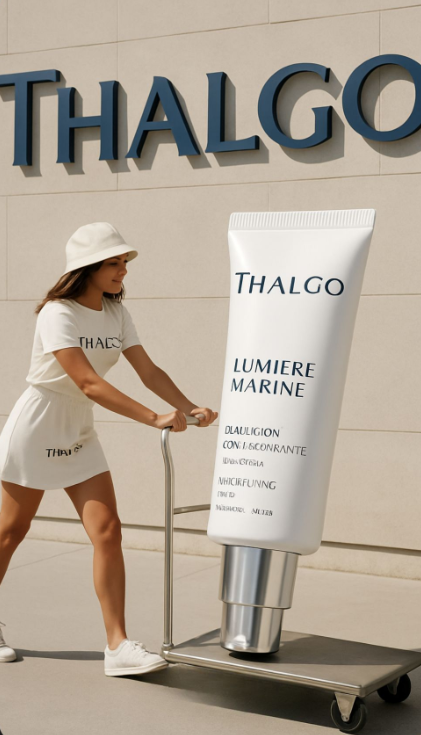
Scale Creates Disruption - The oversized skincare tube instantly breaks visual expectations, giving the ad strong thumb-stop power while keeping the product and brand impossible to miss.
Movement Adds Story - Putting the giant product on a trolley turns a static pack shot into a playful action scene, increasing attention retention while making the creative feel more dynamic.
Branding Feels Monumental - The massive THALGO signage and oversized product reinforce each other, creating strong branding recall while the clean neutral palette keeps the concept premium rather than gimmicky.
Take the hero SKU and scale it into the physical world, then add human interaction. That contrast creates instant visual drama without sacrificing product recognition.
Advertise with Us
Wanna put out your message in front of over 50,000 best marketers and decision makers?
We are concerned about everything DTC and its winning strategies. If you liked what you read, why not join the 50k+ marketers from 13k+ DTC brands who have already subscribed? Just follow this.
At ScaleUP, we care about our readers and want to provide the best possible experience. That's why we always look for ways to improve our content and connect with our audience. If you'd like to stay in touch, be sure to follow us EVERYWHERE🥰
Thanks for your support :) We'll be back again with more such content 🥳