
Their Problem Is Your Signal


Howdy readers 🥰

In this newsletter, you’ll find:
🧐Their Problem Is Your Signal
📊 Google and Microsoft Both Dropped Useful Ad Updates This Week
🏆 Ad of the Day
If you’re new to ScaleUP, then a hearty welcome! You and 50k+ CEOs, CMOS, and marketers have reached the right place. Let’s get into it, shall we? Oh! Before you forget, if someone forwarded this newsletter to you, don't forget to subscribe to our newsletter so you never miss out!
Together with Insense
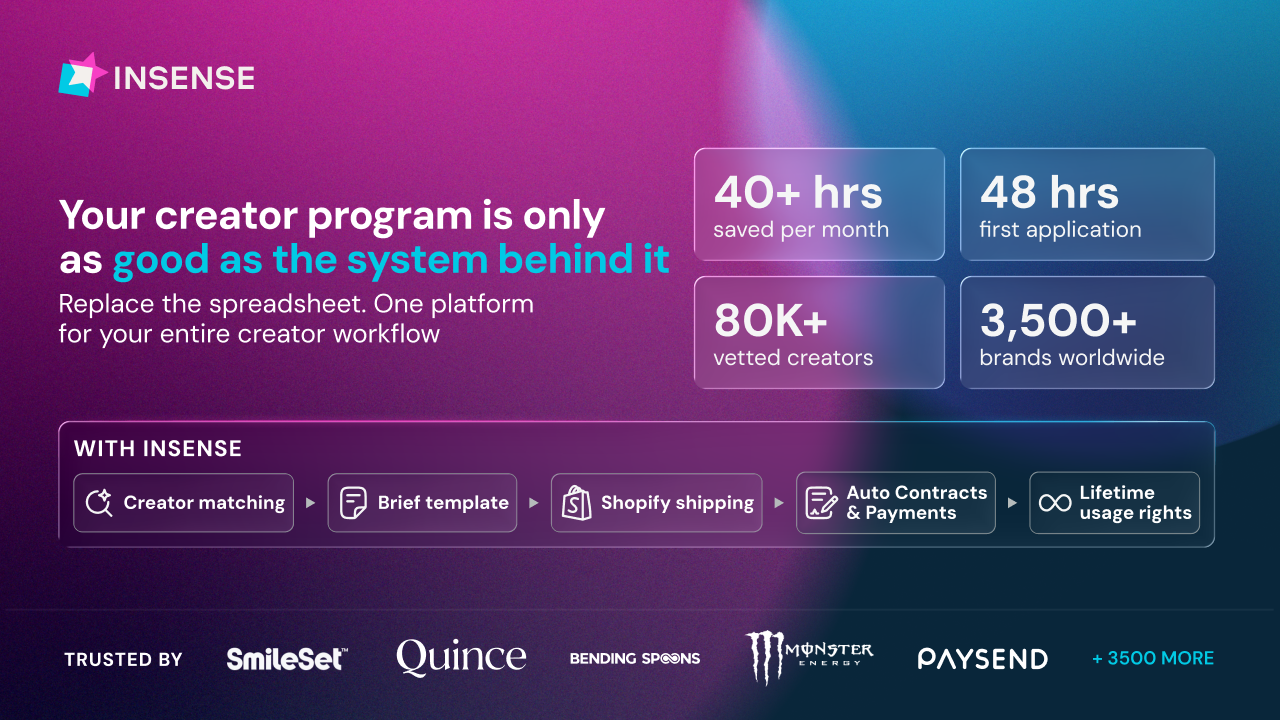
Your creator program is only as good as the system behind it
If your team is managing UGC in spreadsheets, tracking addresses, chasing creators over DM, and manually logging payments - you're not running a program. You're running a headache.
Insense is the self-serve platform built to replace that stack.
One place to receive creator matches from 80,000+ vetted profiles, brief templates, ship product via Shopify, automated contracts and payments, and own full lifetime content usage rights.
Trusted by Quince, Monster Energy, Paysend, and 3,500+ brands worldwide.
Brands using Insense save 40+ hours a month and get first creator applications within 48 hours.
Book a free strategy call by May 22 and get a $200 platform credit towards your first campaign.
🧐Their Problem Is Your Signal
When Meta's algorithm misbehaves inside a brand's account, the symptoms are visible from the outside. Spend patterns shift. Creative rotation accelerates. Promotional cadence tightens. Bestseller mix moves without an offer change.
Each is a fingerprint of a brand fighting the platform, and a signal you can read before you experience the same failure mode yourself.
Strategy 1: Separate Distress Rotation From Scaling Rotation
Accelerated creative rotation means one of two things, a competitor scaling a winner, or an account breaking. The diagnostic is spend direction:
- Rotation + rising spend = scaling. Study the angle
- Rotation + flat spend = creative fatigue
- Rotation + falling spend = distress
Distress rotation is the signal that matters. When a category leader's auction efficiency collapses, the inventory they vacate gets reabsorbed at higher prices across everyone competing for the same placements. Their failure becomes your CPM lift 2-4 weeks later.
Strategy 2: Track the First Unscheduled Promo From a Category Leader
Promotional contagion has direction. It flows from leaders to followers. The signal isn't the third competitor discounting, it's the first unscheduled promo from the brand your category benchmarks against.
Weight your tracking:
- Followers running unscheduled promos: noise
- The category leader breaking cadence: the signal
- Two leaders simultaneously: the auction is tightening for everyone
When the leader breaks their own rhythm, they've absorbed margin pressure first. Followers mimic within 14-21 days, the auction compresses, and brands without a defensive playbook lose the quarter.
Doing this manually across 10-20 competitors is where most teams quit. Particl tracks every competitor move, launches, pricing shifts, promos, bestsellers, inventory, and the AI Connector pipes live data into Claude or ChatGPT, so you can ask what's shifting and get answers in seconds. 40B+ transactions tracked, used by Skims, Gymshark, Vuori, Stanley. Ask Particl your first question today.
Strategy 3: Watch Bestseller Mix Drift for Category-Wide Algorithm Shifts
The most underused signal is bestseller composition. When top SKUs shift without a launch explaining it, the algorithm has changed which products it's profitably serving.
Audit monthly:
- Stable: same top 3-5 SKUs holding rank
- Drift: new SKUs entering top 5 without an ad push
- Reshuffle: 50%+ of the top mix changes inside 30 days
A reshuffle without launches means buyer intent has been reweighted underneath everyone. Brands reading the signal flex their catalog 30-45 days before competitors do.
The platform behaves the same for everyone in a category. The brands compounding read the signal across multiple competitors at once, not just inside their own dashboard.
📊 Google and Microsoft Both Dropped Useful Ad Updates This Week
Google announced new AI-driven bidding and budgeting tools while Microsoft gave advertisers the ability to measure campaigns on their own terms, two updates solving the same underlying problem differently.
The Breakdown:
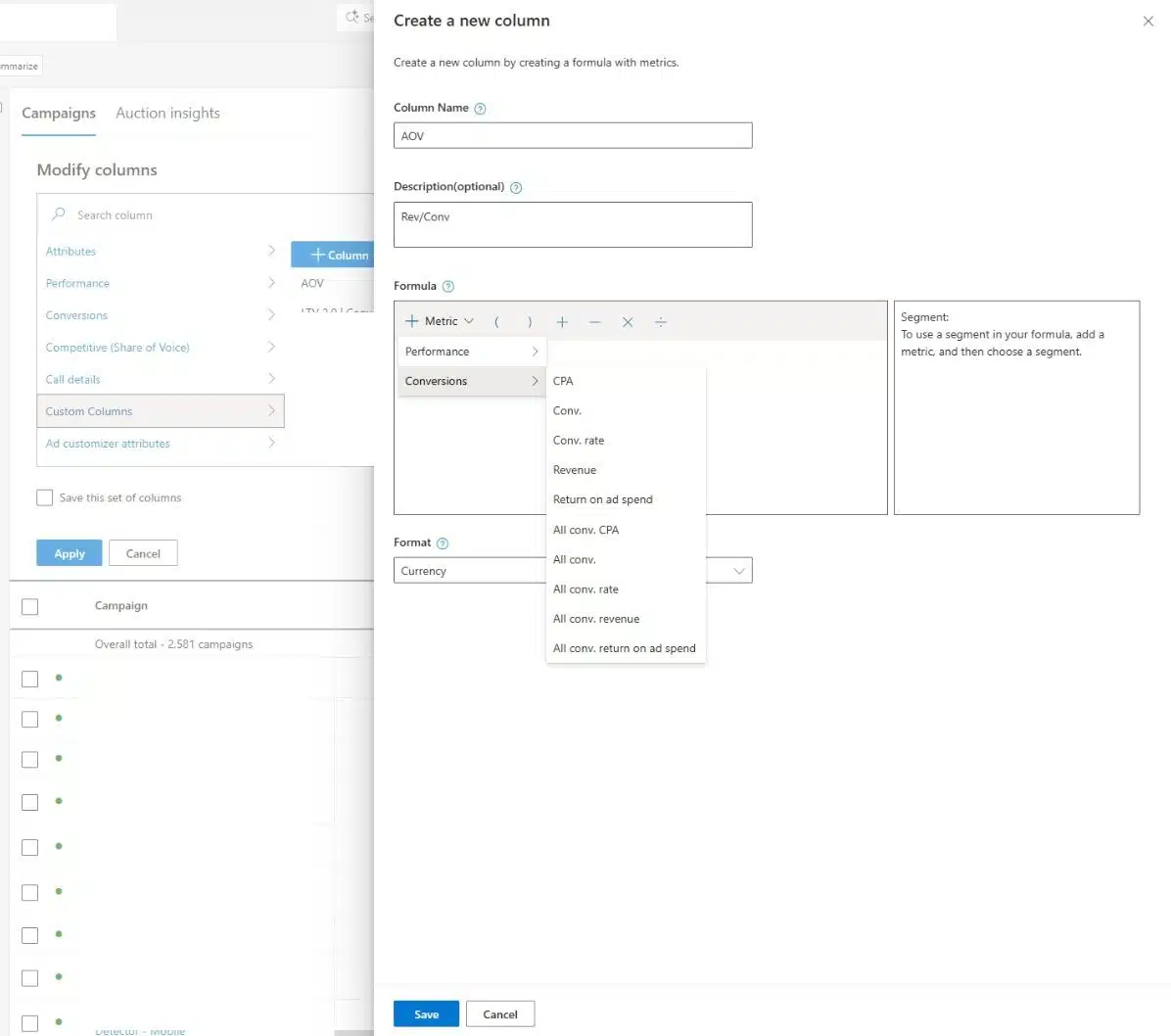
All Conversion Metrics Now Supported - Microsoft expanded custom columns to include all conversion data, not just primary conversions. Advertisers can now build metrics like blended CPA and cost per qualified lead based on their own goals.
Reporting Reflects Real Outcomes - Revenue and ROAS calculations now pull from conversion goal level values rather than platform defaults, giving advertisers data that reflects how their business actually measures success.
Bidding Sees the Full Journey - Journey-aware Bidding feeds the entire customer journey into optimization, including non-biddable conversions. Smart Bidding Exploration is expanding to Performance Max and Shopping, already delivering 27% more unique converting users.
Budgets Move With Demand - Google's demand-led pacing automatically increases spend on high-opportunity days and pulls back on slower ones. Advertisers on total budgets have reported a 66% reduction in manual adjustments.
Google is shifting advertisers toward guiding inputs and letting AI find growth. Microsoft is moving the other way, giving advertisers more control over how they define and measure their own results.
🎥 Ad of the Day

What Works:
1. "Viral" in the headline is borrowed social proof with zero spend. It doesn't say "popular" or "bestselling." Viral implies organic mass validation, which carries more weight with supplement-aware buyers than any review count badge would.
2. "Cortisol Cleanse" is a named mechanism that owns a search term. Branding the product around a specific biological process rather than a generic outcome ("stress relief") creates a proprietary concept the brand can dominate in AI search and social SEO.
3. The sale discount is placed at the bottom like a closing argument, not an opener. Leading with "viral" and ingredients builds perceived value first. The 20% off lands after desire is set, so it reads as reward rather than desperation.
Name your product after the biological mechanism it addresses, not the lifestyle outcome. "Cortisol Cleanse" is searchable, ownable, and TikTok-explainable in ways that "stress support gummies" never will be.
🥳Events
🔥 The World's First Claude-a-thon Is Happening This Weekend.
This Saturday & Sunday | Virtual Event | Free
Claude launches new models and features every week. Most teams are still using 10% of what it can do. This weekend you will build artifacts, automate workflows using Claude Connectors, and create full presentations inside Claude start to finish.
✅ Reserve Your Free Spot Now
Advertise with Us
Wanna put out your message in front of over 50,000 best marketers and decision makers?
We are concerned about everything DTC and its winning strategies. If you liked what you read, why not join the 50k+ marketers from 13k+ DTC brands who have already subscribed? Just follow this.
At ScaleUP, we care about our readers and want to provide the best possible experience. That's why we always look for ways to improve our content and connect with our audience. If you'd like to stay in touch, be sure to follow us EVERYWHERE🥰
Thanks for your support :) We'll be back again with more such content 🥳