
What honest copy actually costs
📦 The return math that tells you how far to tone down an ad, Google Ads is automating more while retiring the old 50-conversion rule, and more!


Howdy readers 🥰

In this newsletter, you’ll find:
📦 The Return Math That Tells You How Far to Tone Down an Ad
🎯 Google Ads is automating more, while rethinking an old rule
🏆 Ad of the day
If you’re new to ScaleUP, then a hearty welcome! You and 50k+ CEOs, CMOS, and marketers have reached the right place. Let’s get into it, shall we? Oh! Before you forget, if someone forwarded this newsletter to you, don't forget to subscribe to our newsletter so you never miss out!
Together with Omnisend
Your BFCM Plan Is Still Waiting on Better Prompts
How much time goes into pulling last year’s reports and explaining them to AI? If every useful answer takes another round of clarification, your BFCM prep barely moves forward.
Omnisend’s BFCM AI playbook gives you detailed prompts for the work you need to get done, so you can spend less time figuring out what to ask.
Use last year’s results to decide which campaigns deserve another run and check deliverability before increasing send volume.
Then turn those findings into a campaign calendar your team can work from.
Better yet, Omnisend connects with Claude or ChatGPT, so you can analyze performance and create editable email templates without leaving the chat.
New to Omnisend? Its email and SMS platform serves 150,000+ ecommerce brands, reporting an average $79 for every $1 spent. Migration is free and takes up to five business days.
Start now, with time to put the answers to work.
📦 The Return Math That Tells You How Far to Tone Down an Ad
Every team that tries to fix returns through copy hits the same wall. Softer claims reduce returns, and they also reduce sales. Without numbers, the loudest voice in the room wins.
Here's how to put both sides on one ledger.
Step 1: Price a single return
Add up what one return really costs:
- Outbound shipping you never recover
- The return label
- Handling and inspection
- The share of returned units you can't resell, times product cost
Example: $8 outbound, $9 label, $4 handling, and 20% unsellable on a 30productcost(6). One return costs $27.
Step 2: Size the problem
Take a product selling 1,000 units a month, where 12% come back for one reason, such as "not as warm as expected." That's 120 returns, or $3,240 a month.
Step 3: Measure the expectation gap
Ask two groups the same question on the same five-point scale, with each point tied to a real situation, from "fine for a cool evening" to "enough for an unheated bedroom."
- Prospects see your current ad, then rate how warm they expect the product to be.
- Recent buyers rate how warm it actually is through a post-purchase email survey.
Keep the question neutral. Ask "how warm," never "how cozy and warm," so the wording doesn't push answers up.
Subtract the buyers' average from the prospects' average. A gap above half a point is worth fixing, in my judgment.
The prospect side is where SurveyMonkey earns its place: it recruits a paid audience that matches your buyers and analyzes the answers automatically, so the gap shows up within. You can get started for free here.
Step 4: Find your break-even conversion loss
Say honest copy halves those returns. That's 60 fewer returns, or $1,620 saved a month.
If each kept order earns $35 in contribution margin, you can lose up to 46 orders (1,620 ÷ 35) before the change costs more than it saves. That's a 4.6% conversion drop.
This figure is conservative, since the buyers you lose were the likeliest to return anyway.
Step 5: Test rewrites against that line
Write two or three honest claims and test each with fresh prospects, one version per person, so nobody compares wording side by side.
Keep the rewrite that shrinks the gap below half a point while purchase intent falls by less than your break-even figure. Survey intent is directional, so confirm with a live split test on 20% of traffic.
Fill in Steps 1 and 2 for your most-returned product today. The monthly cost becomes your budget for the test.
🎯 Google Ads is automating more, while rethinking an old rule
Google is rolling out changes across promotions, international campaigns, PMax testing, and Smart Bidding, with more campaign work happening automatically.
The Breakdown:
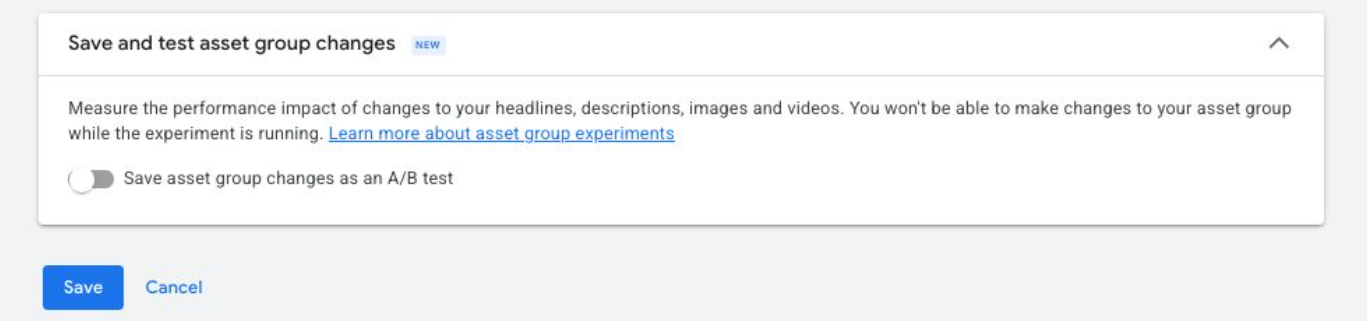
PMax Gets Cleaner Creative Tests - Advertisers can now A/B test headlines, descriptions, images, and videos inside PMax asset groups. Once a test starts, however, that asset group is frozen until the experiment finishes.
Google Finds Your Sales - From October 12, Google can pull deals directly from advertisers’ websites and turn them into promotion assets for eligible Search and PMax campaigns. Advertisers are automatically opted in but can switch it off.
AI Can Clone Campaigns Abroad - Google’s localization beta creates a separate campaign in another language, translating headlines, descriptions, keywords, sitelinks, callouts, and landing pages. One catch: budgets and bids are copied without currency conversion.
Forget the “50 Conversions” Rule - Google’s learning-period guidance no longer points advertisers toward a fixed 50-conversion threshold. Instead, it references roughly 1-2 conversion cycles, with learning continuing even after the visible “Learning” status disappears.
Google Ads is becoming less about manually configuring every campaign element and more about setting the right inputs, testing the results, and checking what Google does automatically. Even familiar rules like waiting for 50 conversions are giving way to more campaign-specific signals.
🏆 Ad of the day
What Works:
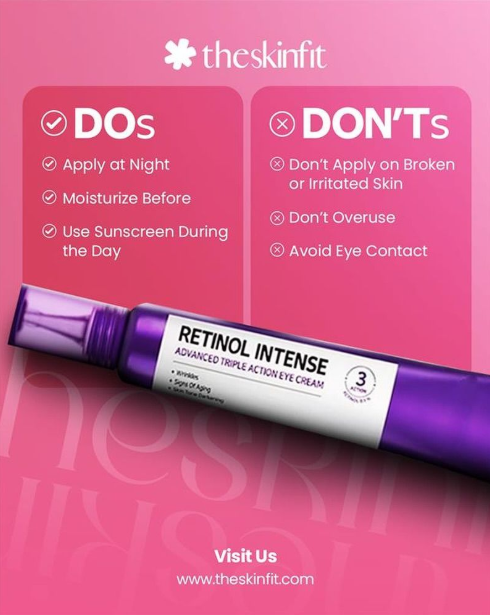
Education Builds Trust - The simple dos-and-don’ts format turns retinol education into fast, scannable guidance, reducing uncertainty around use while positioning the brand as helpful rather than purely promotional.
Contrast Guides Reading - The side-by-side cards create an intuitive visual hierarchy, helping mobile viewers process correct versus incorrect usage quickly without adding unnecessary cognitive load.
Product Anchors Learning - The retinol tube sits across the educational content, keeping the SKU visually tied to the advice and strengthening product recall while the lesson does the persuasion.
For products with usage friction, turn the ad into a mini guide. Practical education can build trust, reduce hesitation and make the product feel easier to adopt.
🥳 Events
🔥 What Meta’s Partnership Ads Data Means for Your Next Test
Tomorrow | 11 AM ET | 60-Minute Virtual Event
Get Meta’s view on where Partnership Ads fit, why creator-handle delivery is changing performance, and how experienced advertisers are testing it in real accounts. Reyna Baker from Meta and Curtis Howland, who has managed $100M+ in spend, break down what deserves budget now.
Can't attend the session live? Register anyway, and you’ll get the recordings in 24 hours.
🔥 How Top Brands Measure, Fund, and Scale Creator Marketing
October 21 | Online | Free Festival
Return on Influence Festival ’26 brings together teams from Adobe, Edelman, ŌURA, Ogilvy, and more to unpack how creator programs actually run. Learn how they measure ROI, justify budget, structure partnerships, and scale from 5 to 5,000 creators without adding chaos.
Can't attend every session live? Register anyway, and you’ll get the recordings in 24 hours.
Advertise with Us
Wanna put out your message in front of over 50,000 best marketers and decision makers?
We are concerned about everything DTC and its winning strategies. If you liked what you read, why not join the 50k+ marketers from 13k+ DTC brands who have already subscribed? Just follow this.
At ScaleUP, we care about our readers and want to provide the best possible experience. That's why we always look for ways to improve our content and connect with our audience. If you'd like to stay in touch, be sure to follow us EVERYWHERE🥰
Thanks for your support :) We'll be back again with more such content 🥳