
Your visibility number might not mean anything
📊 AI attribution is getting harder to trust, not easier. Most teams are reporting a blended score nobody can defend, Google is turning shopping and ad management more AI-native, and more!


Howdy readers 🥰
In this newsletter, you’ll find:
📊 The metric you're reporting on monday might not mean what you think
🛍️ Google is turning shopping and ad management more AI-native
🏆 Ad of the day
If you’re new to ScaleUP, then a hearty welcome! You and 50k+ CEOs, CMOS, and marketers have reached the right place. Let’s get into it, shall we? Oh! Before you forget, if someone forwarded this newsletter to you, don't forget to subscribe to our newsletter so you never miss out!
Together with Modash
Influencer Marketing is getting its own festival. Powered by Modash.
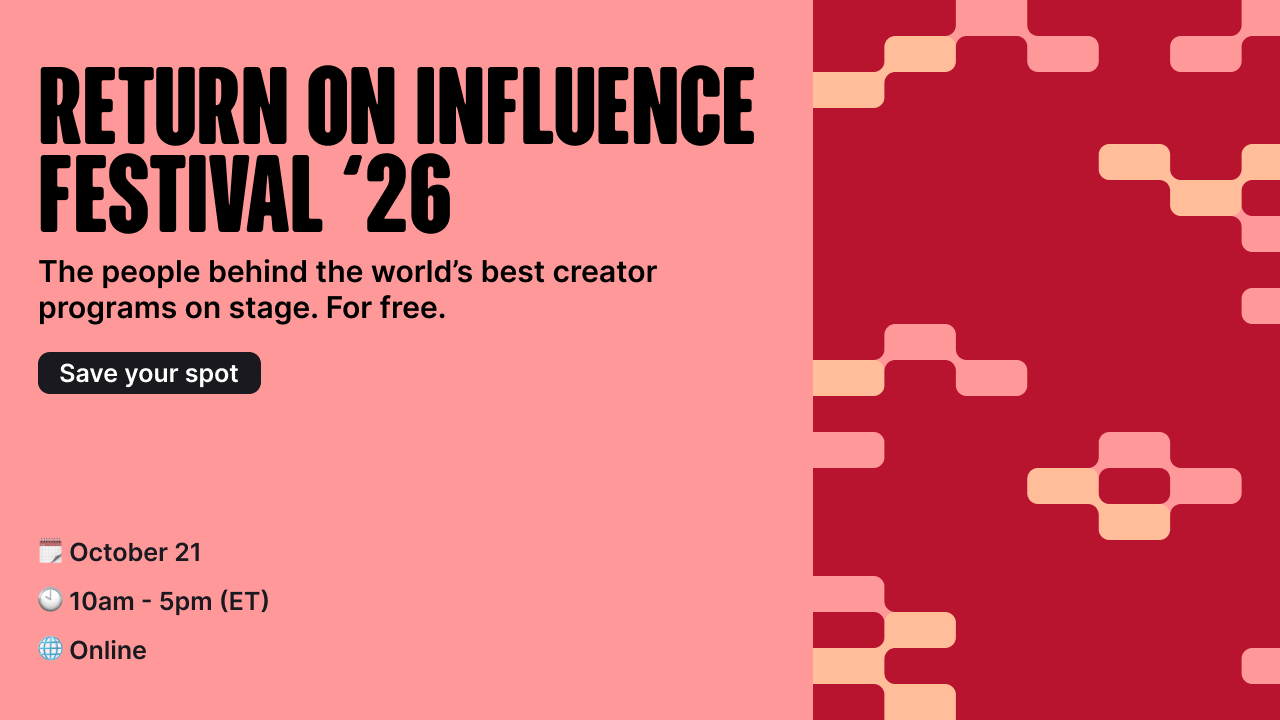
You’ve sat through enough influencer marketing webinars to know the routine. Forty-five minutes later, you still have no useful answer on ROI, budget, or scale.
Return on Influence Festival ’26, powered by Modash, brings you practical answers from teams running creator programs.
On Oct 21st, you’ll walk away with:
- Practical frameworks to measure influencer ROI and make a stronger case for budget.
- Real campaign examples to help you decide where influencer fits in your marketing mix.
- Strategies to scale from 5 to 5,000 creators without multiplying the chaos.
Leah Walker, Director of Creator & Influencer Partnerships at Adobe, and Tyler Vaught, Global Head of Creator Marketing at Edelman, along with other industry leaders. More to be announced.
Join free on Oct 21st and leave with actionable insights to build and scale a creator program that moves the needle.
Can't attend every session live? Register anyway, and you’ll get the recordings in 24 hours.
📊 The metric you're reporting on monday might not mean what you think
AI citation attribution is getting harder to trust, not easier, even as more of a category's discovery activity happens inside AI answers rather than a click a traditional analytics stack can trace.
A team reporting "AI visibility" right now is often stitching together a number from tools that measure genuinely different things, forced-search citation counts, mention frequency, branded search lift, without a shared definition of what any of it is actually supposed to prove.
That gap matters more heading into a quarter where leadership will ask a direct question: is the AI visibility work paying off. A team with no defensible answer to that question isn't failing at the work. It's failing at the measurement layer sitting on top of it, and those are very different problems with very different fixes.
Stop reporting a single blended visibility score
A single number that averages citation rate, mention count, and sentiment across platforms is easy to put in a slide and nearly impossible to defend under a follow-up question, since a drop in one input and a rise in another can produce an identical flat line that means nothing.
Report the components separately: citation presence, mention frequency, and branded search lift, each on its own trend line rather than folded into one score. A leadership team that sees three honest lines gets a more useful picture than one that sees a single number moving for reasons nobody can explain.
Anchor every report to a disclosed method, not a vendor's black box
A number without a stated methodology invites a challenge no team can answer well in the room. A number with a disclosed method, here's exactly how this was measured and what it does and doesn't capture, survives that same challenge.
Document how each metric in your report is actually collected before the next reporting cycle, not during a leadership meeting when someone asks. This is a one-time cost that pays off every quarter after.
Track trend lines over isolated snapshots
A single month's citation count tells you almost nothing on its own, since AI answer engines are volatile enough that one snapshot can look dramatically better or worse than the underlying trend actually is.
Building consistent baselines and trend lines around citation and mention data across ChatGPT, Perplexity, Gemini, and Google AI Mode, rather than reconstructing a defensible number from scratch every reporting cycle, is what Semrush's AI Visibility Toolkit is built to surface. You can try it free for 7 days.
The teams earning trust in this environment aren't the ones promising precision no tool can deliver. They're the ones showing their work.
🛍️ Google is turning shopping and ad management more AI-native
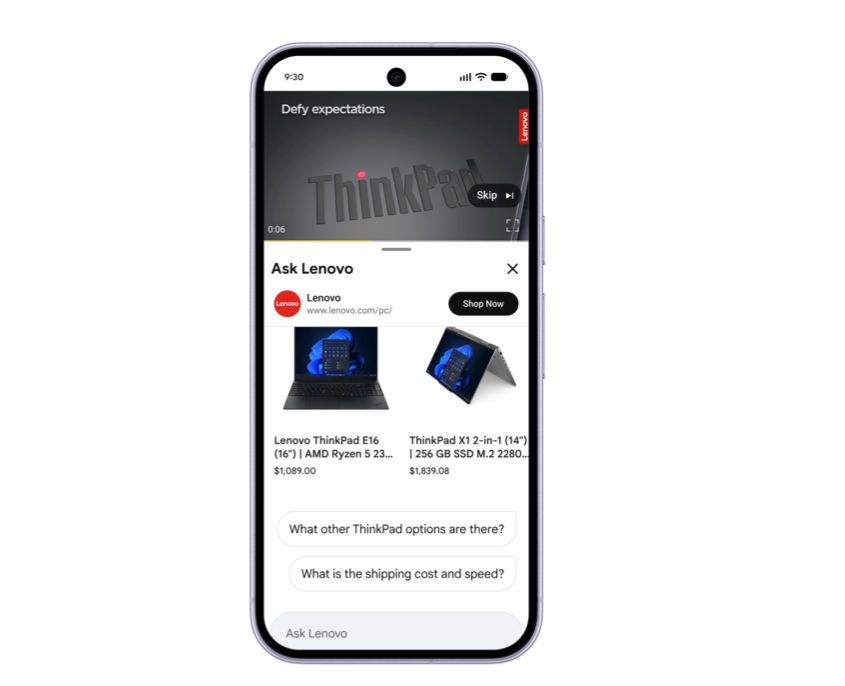
Google is expanding its commerce stack with AI shopping visibility, conversational YouTube ads and agent-assisted checkout, while a new Google Ads benchmark shows advertisers how their spend and clicks compare with similar businesses.
The Breakdown:
Track AI Visibility - Merchant Center’s AI performance insights now show how a retailer’s share of voice compares with other brands across AI Mode and AI Overviews in Australia, Canada, India, New Zealand and the U.S.
YouTube Gets Shopping Agents - Eligible U.S. retailers can test Google’s Business Agent inside YouTube ads, letting shoppers ask product questions about features, fit and other details without leaving the video experience.
Checkout Gets Smarter - Google is expanding its Universal Commerce Protocol with cart transfers and checkout testing, while richer product feeds and loyalty data can help AI surface more relevant recommendations and member-specific pricing.
Compare Spend With Peers - Google Ads’ new Spend Benchmarks report compares weekly spend and clicks with similar advertisers based on industry and location, though Google warns that peer spending should be treated as context, not a target.
Google is trying to connect the entire shopping journey, from AI discovery to product questions and checkout, while giving advertisers more context around spend. The biggest shift is that richer product data is becoming increasingly important for how brands appear and convert inside AI-powered commerce.
🎥 Ad of the Day

What Works:
Metaphor Stops Scroll - The giant sunscreen casting literal shade turns the product benefit into a dramatic visual metaphor, creating strong thumb-stop power while making protection instantly understandable.
Scale Builds Importance - The oversized tube dominates the city scene, giving the product monumental presence while the crowd beneath it reinforces how much protection the sunscreen visually provides.
Copy Extends Concept - “Be the shade you carry” connects the visual directly to portability and protection, strengthening message-market fit while keeping the idea memorable without adding cognitive load.
Take the core product promise and make it physically happen in the scene. When the benefit becomes the visual itself, product communication gets faster and more memorable.
Advertise with Us
Wanna put out your message in front of over 50,000 best marketers and decision makers?
We are concerned about everything DTC and its winning strategies. If you liked what you read, why not join the 50k+ marketers from 13k+ DTC brands who have already subscribed? Just follow this.
At ScaleUP, we care about our readers and want to provide the best possible experience. That's why we always look for ways to improve our content and connect with our audience. If you'd like to stay in touch, be sure to follow us EVERYWHERE🥰
Thanks for your support :) We'll be back again with more such content 🥳