
AI just handed you a sale
🤖 An agent completed the transaction at one price. Your checkout showed another. That sale is gone, AI search is growing, but publishers are getting fewer clicks, and more!


Howdy readers 🥰
In this newsletter, you’ll find:
🤖 The sale an AI agent just handed you, and your checkout lost
🔎 AI Search Is Growing, But Publishers Are Getting Fewer Clicks
🏆 Ad of the day
If you’re new to ScaleUP, then a hearty welcome! You and 50k+ CEOs, CMOS, and marketers have reached the right place. Let’s get into it, shall we? Oh! Before you forget, if someone forwarded this newsletter to you, don't forget to subscribe to our newsletter so you never miss out!
Together with Levanta
How Much Revenue Is Your Roster Leaving Behind?
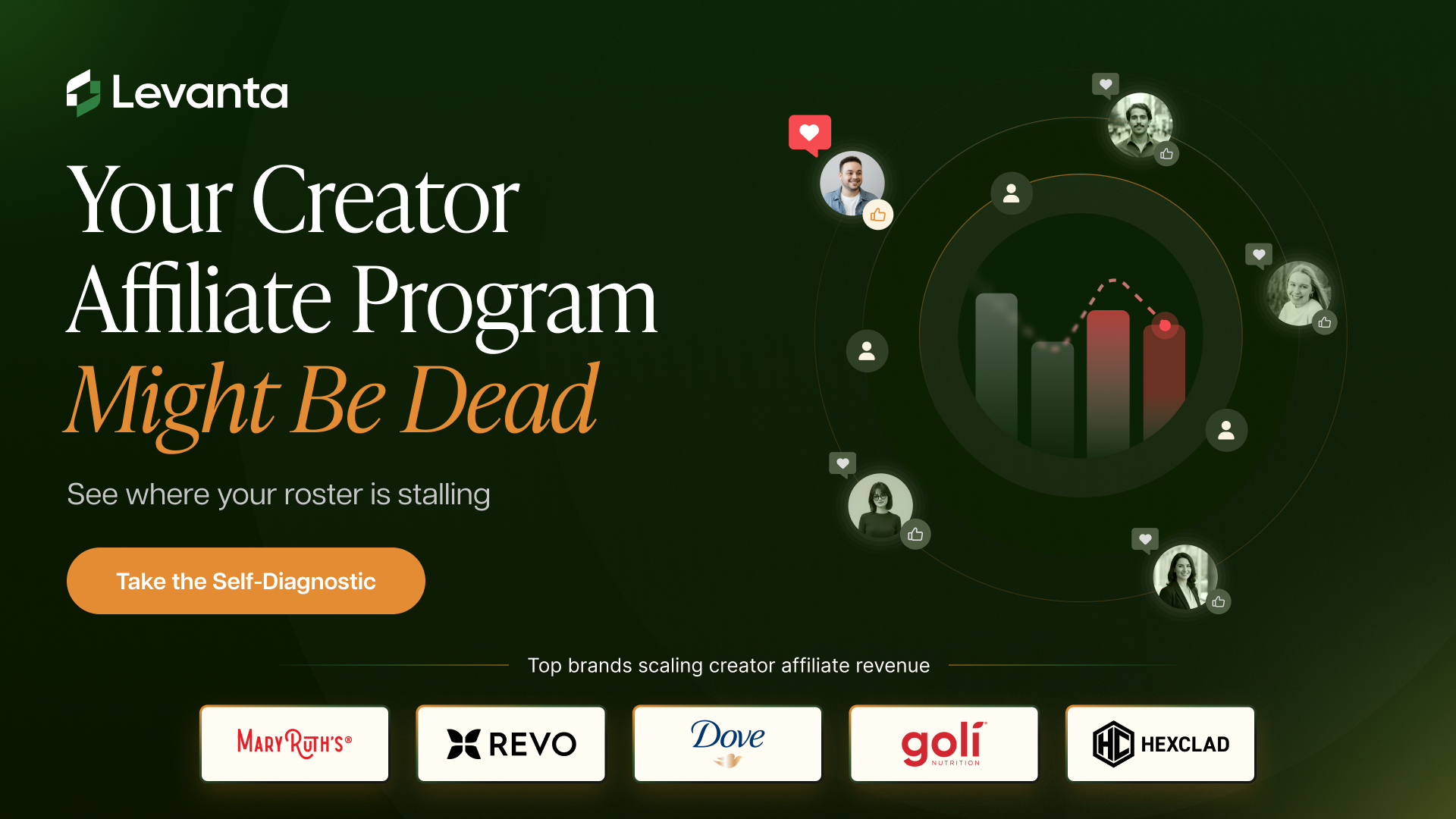
Open your dashboard and ask two questions: which creators brought in new customers last month, and which commissions kept them posting?
If the answers are not obvious, your team is guessing where to invest while stronger revenue opportunities go unfunded.
Levanta’s self-diagnostic checks your program against seven warning signs, then pinpoints the roster gap costing you sales before you spend another dollar recruiting creators.
- Hyperice generated $500K+ in one quarter and crossed $100K per month within 30 days, with commissions below 1%.
- JLab tripled affiliate sales as Levanta creators drove 364K+ clicks and contributed 48% of total conversions.
- MISSION generated 3,600 orders in 60 days at a 9% conversion rate and 25:1 ROAS after Amazon’s Brand Referral Bonus.
You leave knowing which relationships deserve another campaign and where your next dollar can return more revenue.
Run it before another month passes with high-potential creators sitting inactive.
Download Levanta’s 7-step checklist to find the roster gaps costing you sales.
🤖 The sale an AI agent just handed you, and your checkout lost
Shopping agents stopped being a demo this year. Google now completes checkout on merchant sites through Search, AI Mode, and Gemini, where a buyer sets size, color, and a price ceiling, confirms once, and the agent fills the cart and pays.
If the agent sends a shopper to your store on one price and your checkout shows another, that sale is gone, not because the product was wrong, but because two systems on your own site disagreed.
That's a different failure than the one most catalog audits go looking for. A human hitting a price mismatch might shrug and check out anyway. An agent completing a transaction on a stated price ceiling has no equivalent tolerance. The mismatch is now a hard stop, not minor friction.
Audit the gap between what agents see and what your checkout shows
Agents evaluate structured data, not the page a human sees: title, spec fields, current price, and stock status pulled from your feed or product schema. Your checkout often runs on a separate cart and pricing system that doesn't always sync with that feed in real time.
Pull a sample of your highest-traffic SKUs and compare the price and spec values in your structured data against what actually renders at checkout right now, not at the last time someone checked. Any gap here is a lost-sale mechanism, not a data-hygiene footnote.
Prioritize by transaction risk, not by findings volume
A coverage audit across thousands of SKUs and variants produces more findings than any team can act on manually, and treating every finding equally buries the ones actually losing revenue.
Rank findings by what's closest to completing a transaction: live price mismatches first, then spec fields an agent would use to filter a comparison set, then everything else. That ordering separates fixing what's costing sales this week from working through a backlog that never catches up.
Treat this as a continuous check, not a pre-launch one
A catalog with thousands of SKUs changes daily between now and Black Friday, and a mismatch introduced today by a routine price update or a supplier feed change won't show up in last month's audit.
Seeing every title, spec, image, and price checked against your source of truth continuously, then ranked by what's actually costing money, is what Zenyt's AI shopper agents are built to do.
New York & Company found over 500 issues before BFCM worth an estimated $100K to $300K in potential revenue, and Caudalie generated €700K in incremental revenue within 12 weeks. You can get your free store analysis before peak traffic, and the agents shopping it can find the gaps first.
An AI agent handing you a sale is the easy part now. Keeping it is what most stores haven't audited for yet.
🔎 AI Search Is Growing, But Publishers Are Getting Fewer Clicks
OpenAI is building more of the search stack itself while ChatGPT rapidly grows as a destination. Google is not disappearing either. People are using both, but the way they search, click and reach websites is changing.
The Breakdown:
OpenAI is building its own search infrastructure: Peec AI found a “prefer-index-over-serp-v3” experiment comparing OpenAI’s index with third-party results, plus specialized indexes for news, shopping, PDFs, YouTube and academic papers.
ChatGPT is climbing while rival search engines fall: ChatGPT.com reached 1.09 billion monthly US visits, up 48.38% year over year and ranking ninth. Bing fell 50.43%, while DuckDuckGo declined 15.83%.
Google users are searching less: 95% of ChatGPT users still use Google, but households with ChatGPT Search access made 9.4% fewer traditional searches, with the decline reaching 17% after 20 weeks.
Publishers face a click and measurement problem: AI Mode can reduce external clicks, while GA4 often struggles to attribute AI referrals. One publisher saw direct traffic reach over 78% of total traffic.
AI does not need to replace Google to reshape search. OpenAI can build its own index while users keep both tools, yet publishers may still lose searches and clicks. Worse, growing attribution gaps make it harder to see exactly where remaining traffic comes from.
🏆 Ad of the day
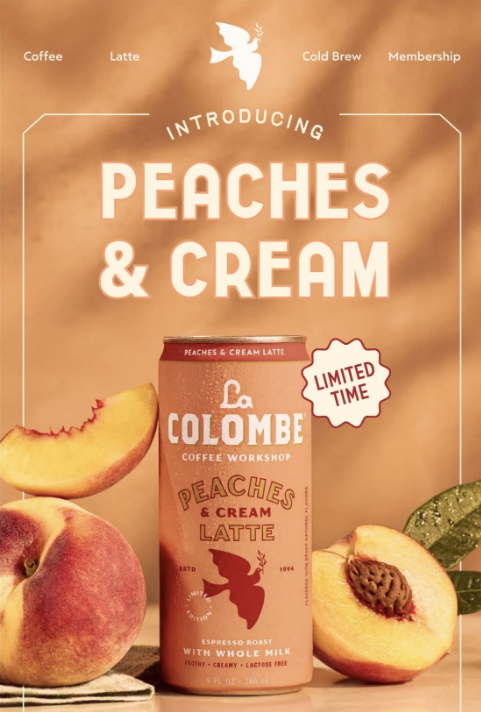
What Works:
Seasonality Drives Desire - “Introducing Peaches & Cream” gives the launch clear seasonal relevance, while the warm peach palette creates immediate flavor association and strong thumb-stop appeal.
Scarcity Adds Urgency - The “Limited Time” badge introduces natural urgency without relying on a discount, making the product feel more collectible and giving shoppers a stronger reason to act quickly.
Flavor Feels Tangible - Fresh peach imagery surrounds the can and reinforces the flavor visually, helping shoppers almost taste the product while keeping product communication simple and highly intuitive.
For seasonal drops, make the flavor the visual world. Match the palette, ingredients and headline to one sensory idea, then add scarcity to push immediate purchase intent.
💃 Events
🔥 How to Turn Bigger Growth Targets Into a Stronger Budget Case
September 17 | Virtual Event
Krithika Shankarraman, the first marketing hire at Stripe and OpenAI, joins AirOps CMO Christy Roach to unpack findings from 300+ marketing leaders. Learn how to connect investment to growth, defend the work that moves pipeline, and make resource asks that leadership can evaluate quickly.
Advertise with Us
Wanna put out your message in front of over 50,000 best marketers and decision makers?
We are concerned about everything DTC and its winning strategies. If you liked what you read, why not join the 50k+ marketers from 13k+ DTC brands who have already subscribed? Just follow this.
At ScaleUP, we care about our readers and want to provide the best possible experience. That's why we always look for ways to improve our content and connect with our audience. If you'd like to stay in touch, be sure to follow us EVERYWHERE🥰
Thanks for your support :) We'll be back again with more such content 🥳