
Keep your best offer off-site
🔐 Why your best BFCM offer should never appear on your website, ChatGPT expands shopping ads, CTA buttons, and AI-powered creative enhancements, and more!


Howdy readers 🥰
In this newsletter, you’ll find:
🔐 Why your best BFCM offer should never appear on your website
📢 ChatGPT expands shopping ads, cta buttons, and AI-powered creative enhancements
🏆 Ad of the day
If you’re new to ScaleUP, then a hearty welcome! You and 50k+ CEOs, CMOS, and marketers have reached the right place. Let’s get into it, shall we? Oh! Before you forget, if someone forwarded this newsletter to you, don't forget to subscribe to our newsletter so you never miss out!
Together with AirOps
Your Next Content Priority Starts With This Research
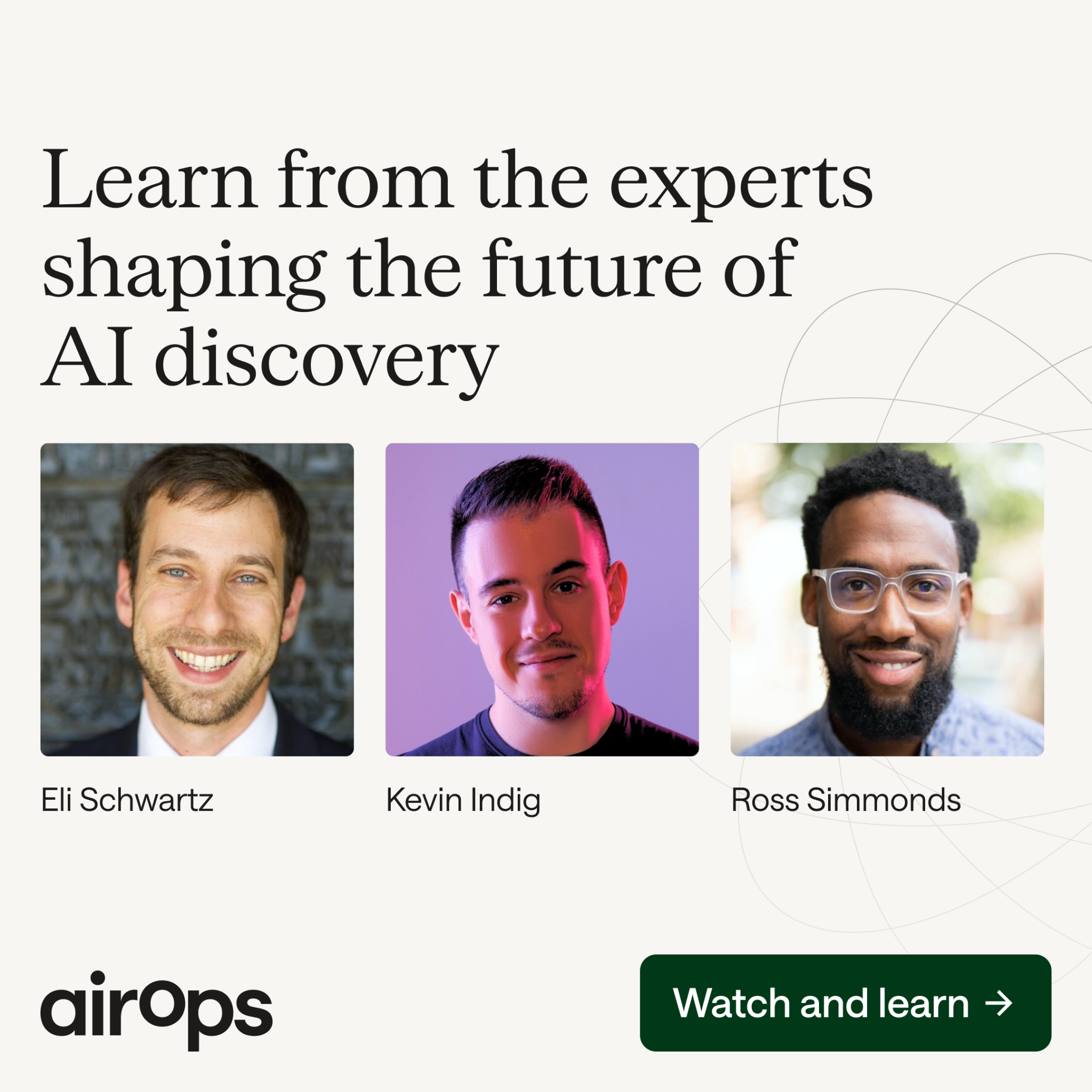
Your next article costs time and budget. If AI answers the question before buyers reach your site, it's harder to justify the investment.
AirOps brings together Kevin Indig, Ross Simmonds, and Eli Schwartz’s webinar takeaways to help you choose content worth funding next.
- Kevin Indig reports informational clicks fell 35–60% over the past year. Give buyers a reason to visit with original research.
- Ross Simmonds’ research covered 380,000 B2B answers. Comparison pages dominated citations, making separate “alternatives” and “versus” pages worth prioritizing.
- Eli Schwartz recommends purchase-focused content with clear conversion paths.
Together, their findings give you a practical basis for deciding which pages deserve your team’s time as AI changes how buyers research.
🔐 Why your best BFCM offer should never appear on your website
When a Black Friday offer goes live sitewide, it reaches everyone at once: subscribers, coupon sites, marketplace price trackers, and shoppers who would have paid full price anyway.
An email-only offer works differently. It exists for the people you chose and nobody else.
What it protects
- Public pricing. Your site keeps its normal sale structure, so price-tracking tools and comparison sites don't record your deepest discount.
- Subscriber value. Being on your list means something. That gives people a reason to stay subscribed after the holidays.
- Measurement. Every redemption traces back to one send, so you can see what email drove it without arguing over attribution.
Enflow Digital used exactly this setup for a skincare client before BFCM. The offer didn't appear anywhere on the brand's website.
One plain-text email went to 1,676 loyal customers, chosen with Omnisend's segmentation, and generated nearly $18,000, beating the previous month's broad-audience campaigns combined. Co-founder Karolina explains how they built the audience and the offer.
How to keep it email-only
- Use single-use codes. One code per recipient stops a code from spreading to coupon sites. If your platform can't issue them, use a hidden landing page plus a short code expiry.
- Hide the landing page. Exclude it from navigation and site search, and add a noindex tag so it doesn't show up in search results.
- Set an expiry. A 72-hour window keeps the offer tight. That length is my judgment.
- Limit stacking. Make sure the code can't combine with your public sale, or your best customers get a discount nobody planned.
Test for leaks
Search the code name on the main coupon sites 24 hours after sending. Check redemptions against recipients too. If redemptions come from accounts that never received the email, the code leaked.
Choose who gets it
An email-only offer works best for a defined group, such as repeat buyers or your most engaged subscribers. Sending it to your whole list turns it back into a public sale with extra steps.
What to offer
Email-only doesn't have to mean the deepest discount. A gift, a bundle that isn't sold publicly or early access to limited stock all feel exclusive without putting a lower price on record.
Omnisend runs email and SMS for 150,000+ ecommerce brands, and migration takes up to five business days at no cost. You can check out Omnisend here.
Pick one group for an email-only BFCM offer, and set up single-use codes before you write the email.
📢 ChatGPT expands shopping ads, cta buttons and AI-powered creative enhancements
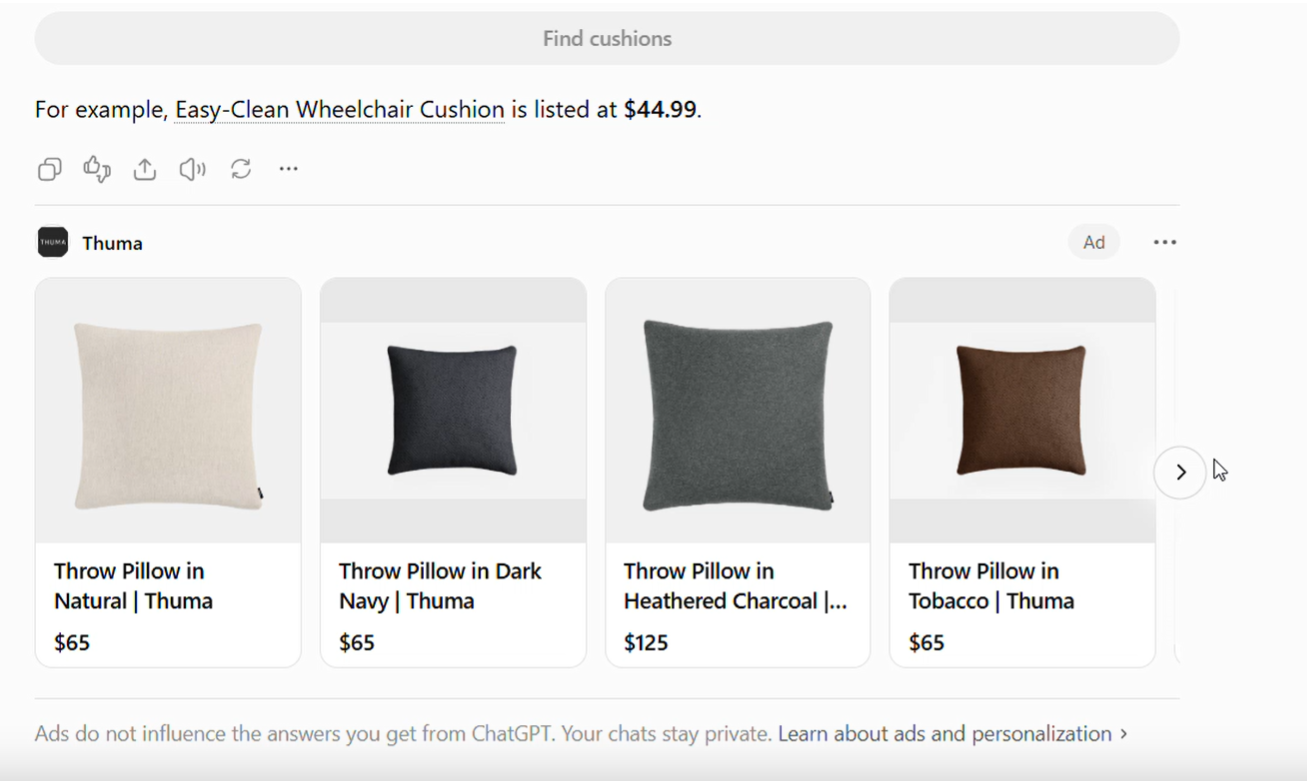
OpenAI is expanding ChatGPT's advertising capabilities with single-brand shopping ads, clickable CTA buttons and automated creative enhancements, while fixing a tracking bug that caused marketers to underestimate referral traffic.
The Breakdown:
ChatGPT Tests Single-Brand Shopping Ads - New ad units appear at the bottom of ChatGPT responses, displaying products from one advertiser with its website name, favicon, product images, and prices.
CTA Buttons Appear Inside ChatGPT Ads - OpenAI is testing clickable calls to action with dotted underlines and arrow icons, giving advertisers a more prominent way to direct users toward their websites or offers.
AI Will Automatically Modify Ad Creatives - Starting October 31, OpenAI's creative enhancements will be enabled by default, allowing AI to rewrite headlines, translate copy, resize images, and optimize landing page destinations without approving every variation.
ChatGPT Fixes Referral Tracking Bug - Missing UTM parameters caused approximately 31,000 daily ChatGPT visits to disappear from referral reports in one analysis, with many classified as direct traffic. OpenAI began rolling out a fix on October 15.
ChatGPT is expanding its advertising formats while introducing more automation into campaign delivery. Advertisers gain new opportunities for product visibility and engagement, but should review creative enhancement settings and monitor attribution accuracy to maintain control over their campaigns and measure performance reliably.
🎥 Ad of the Day
What Works:
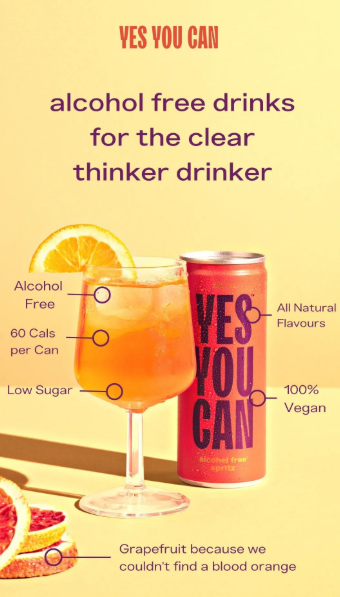
Positioning Feels Distinct - “Clear thinker drinker” gives the alcohol-free proposition a sharper identity, reframing abstaining as an intentional lifestyle choice rather than a compromise.
Benefits Scan Easily - Alcohol-free, low sugar, 60 calories, and vegan cues surround the product clearly, reducing cognitive load while giving shoppers multiple fast reasons to consider switching.
Color Builds Appetite - The warm yellow background and orange drink create a bright, refreshing visual system, while the red can keeps branding recall strong and the product easy to spot.
Instead of only listing functional benefits, give the customer a label they want to identify with. Strong identity framing can make alternative products feel more aspirational.
Advertise with Us
Wanna put out your message in front of over 50,000 best marketers and decision makers?
We are concerned about everything DTC and its winning strategies. If you liked what you read, why not join the 50k+ marketers from 13k+ DTC brands who have already subscribed? Just follow this.
At ScaleUP, we care about our readers and want to provide the best possible experience. That's why we always look for ways to improve our content and connect with our audience. If you'd like to stay in touch, be sure to follow us EVERYWHERE🥰
Thanks for your support :) We'll be back again with more such content 🥳